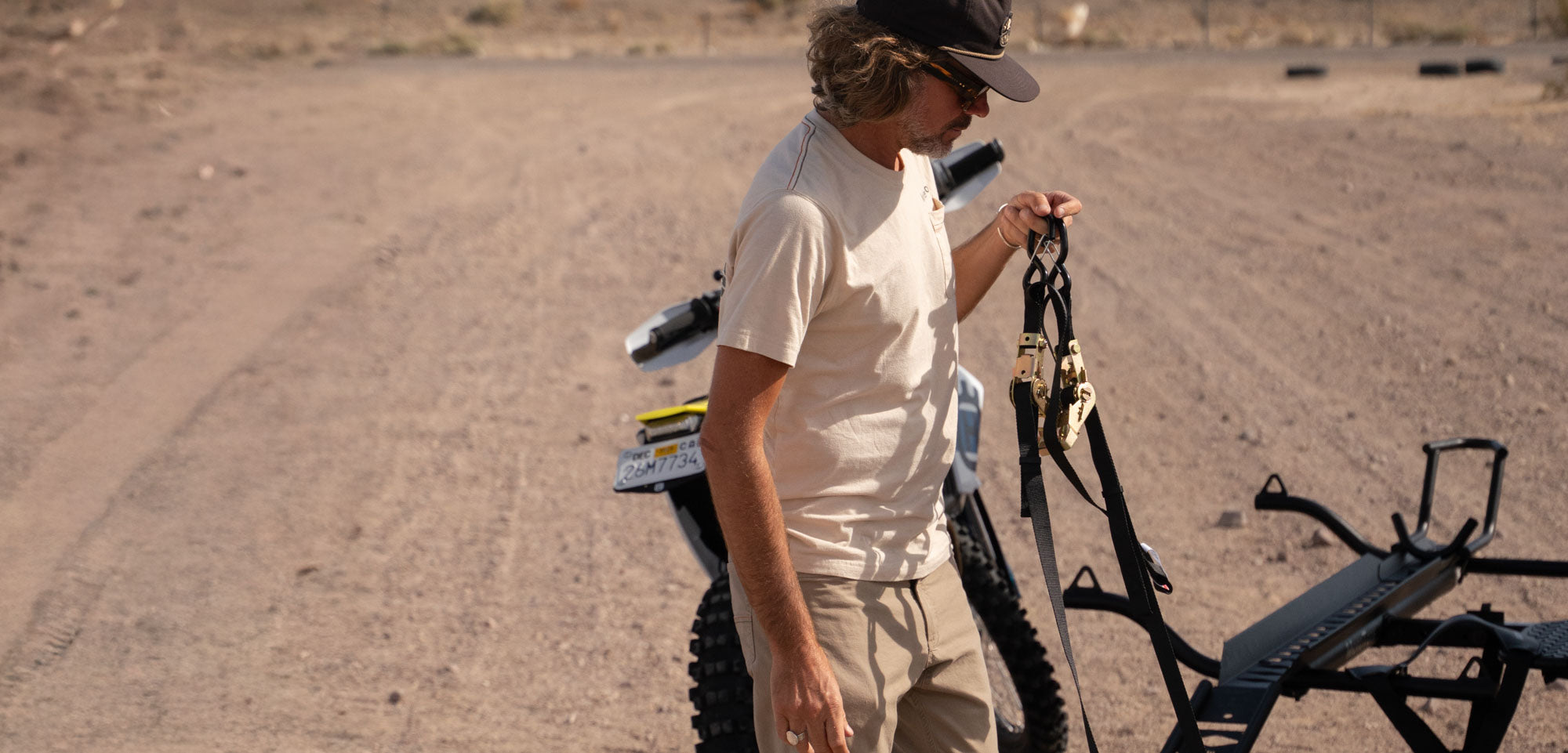
Tie Down Buying Guide
Everything you need to know to secure your motorcycle safely.
Step 1: Choose Tie-Down Mechanism
The first decision is selecting the type of tie-down buckle. Both styles safely secure your motorcycle—they simply work a little differently.
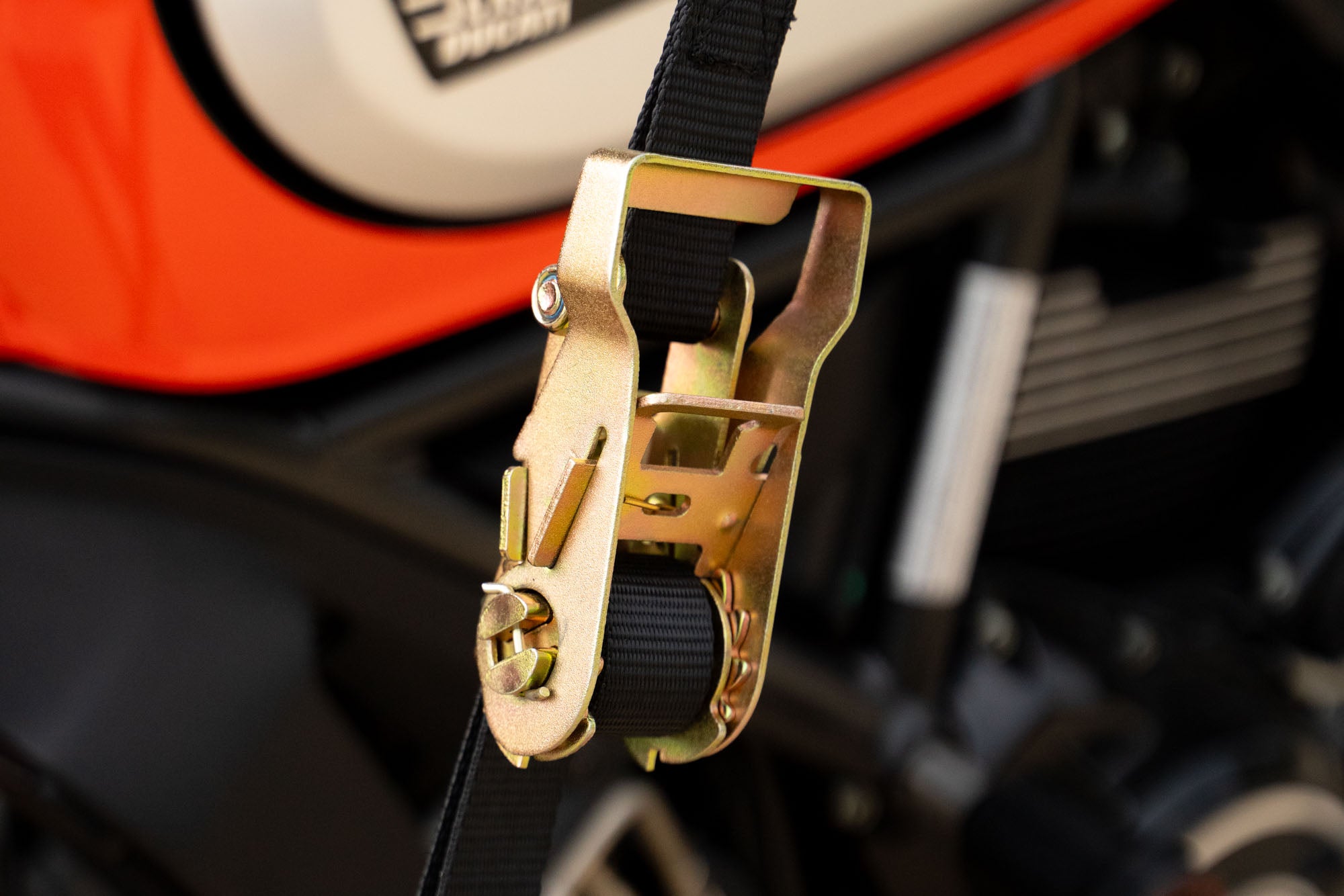
Ratchet Straps
Ratchet straps use a mechanical ratcheting mechanism to tighten the strap. Instead of relying on pulling force alone, the ratchet creates leverage, allowing you to generate high tension with much less physical effort.
They are an excellent choice for larger motorcycles, heavier loads, or anyone who wants maximum holding force.
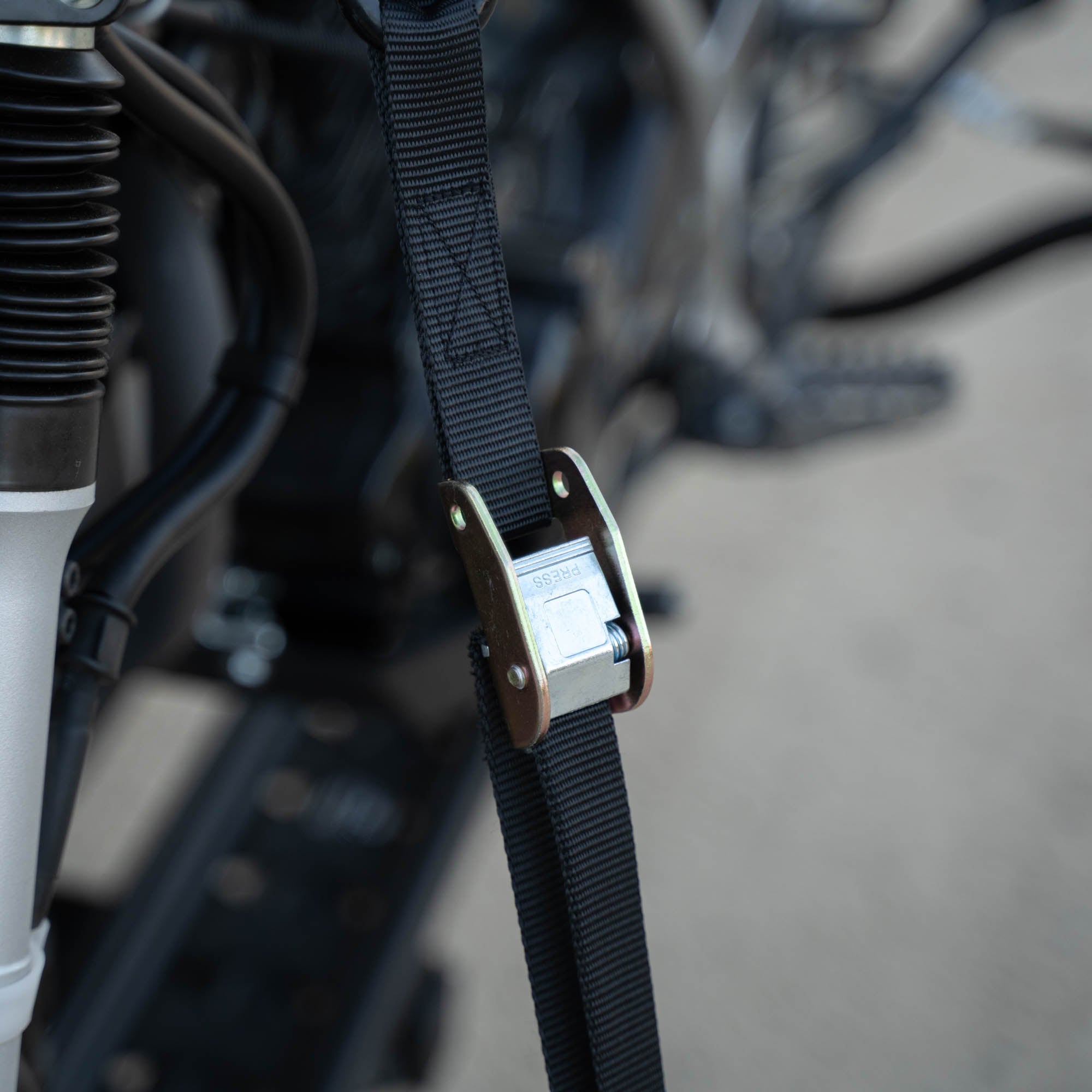
Cam Buckle Straps
Cam buckle straps use a simple pull-tight design. Tension is created entirely by hand, making them quick, lightweight, and easy to use.
While they don't provide the same mechanical advantage as a ratchet strap, they offer more than enough holding power for most motorcycles when properly tightened.
Step 2. Choose the Front Connection
The front tie-downs are responsible for keeping your motorcycle upright, centered, and stable during transport. While every motorcycle accomplishes this the same way, not every bike offers the same attachment points. Choosing the right front connection ensures both a secure hold and protection for your motorcycle.
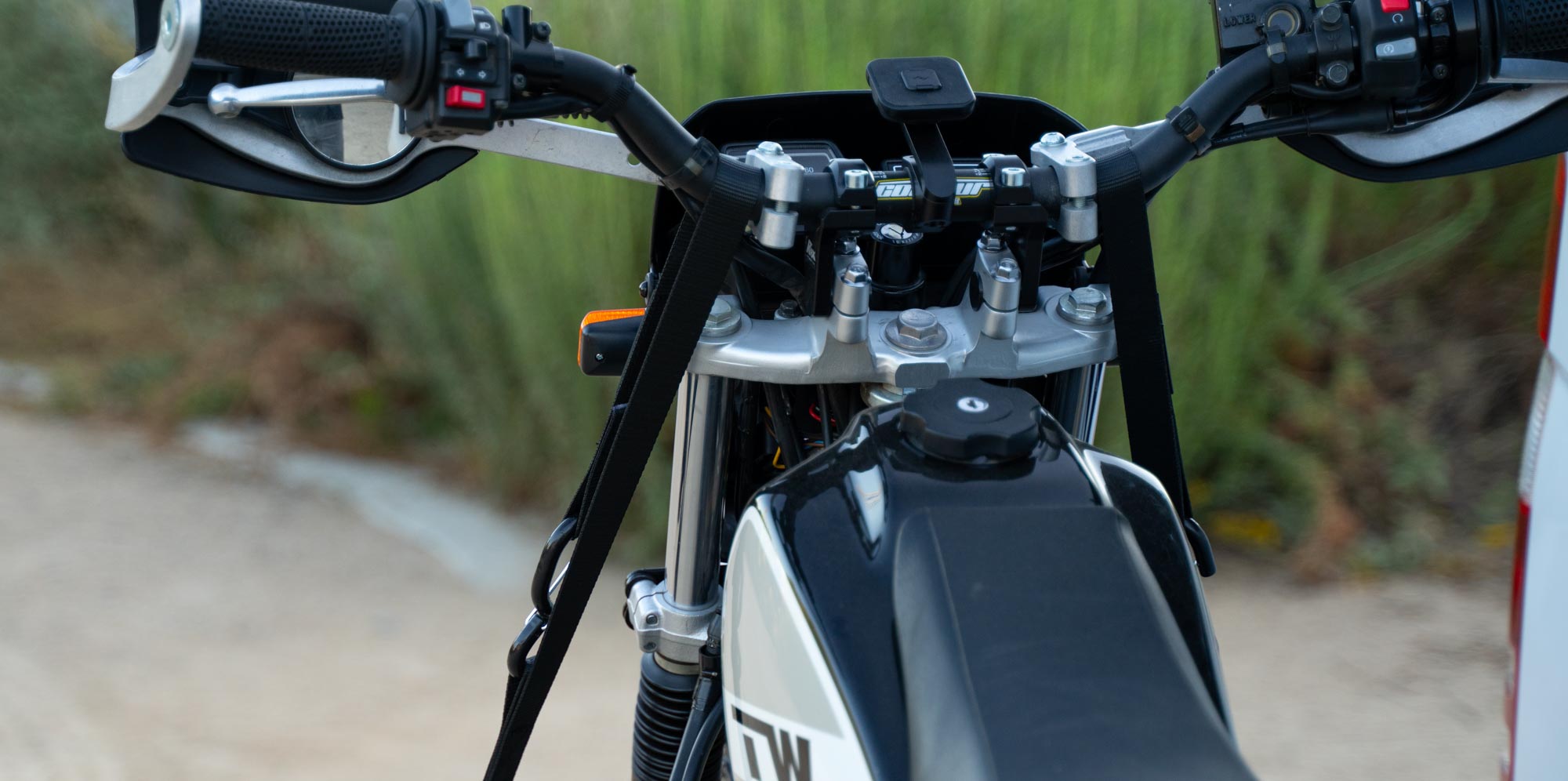
SafeLoop Soft Loops
SafeLoops wrap around the handlebars, triple clamp, or another sturdy part of the motorcycle to create a secure attachment point. Your tie-down hook then connects to the loop instead of directly to the bike.
Benefits
- Protects painted and finished surfaces.
- Prevents metal hooks from scratching components.
- Works on nearly every motorcycle.
- Extremely versatile.
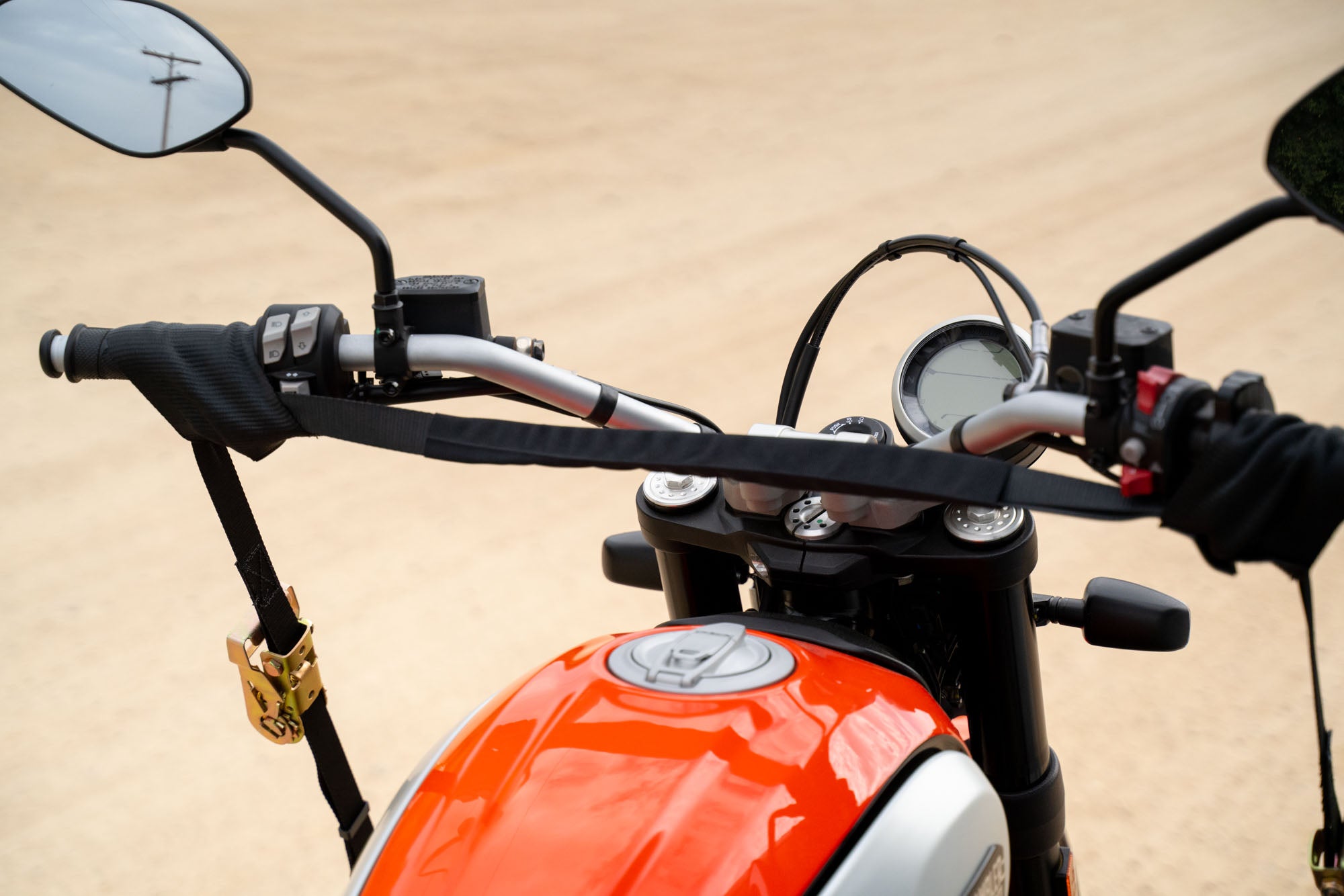
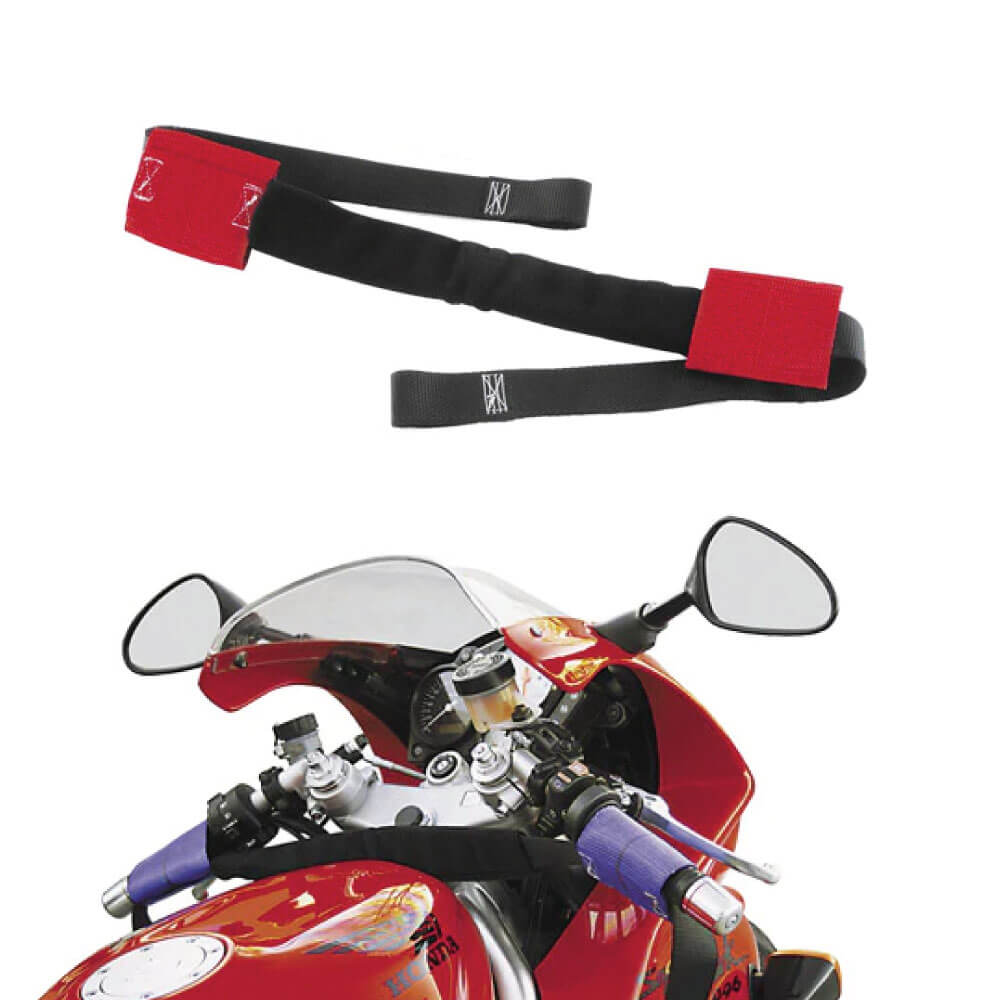
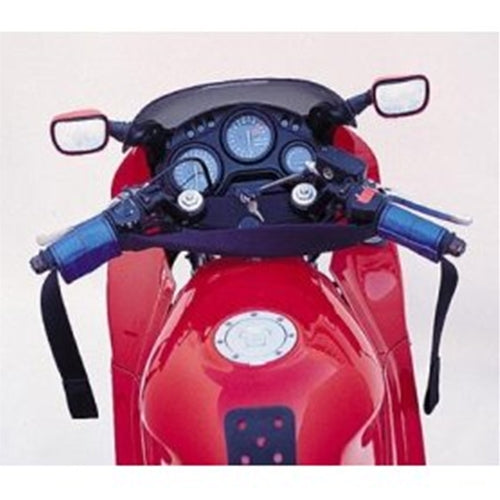
HandleCuff System
Designed specifically for motorcycles with limited handlebar access.
Many sport bikes use clip-on handlebars or have little exposed bar available for traditional soft loops. The MotoTote HandleCuff wraps securely around the grips to create strong, reliable tie-down points.
Benefits
- Creates secure attachment points.
- Protects controls and bodywork.
- Quick to install.
- Purpose-built for performance motorcycles.
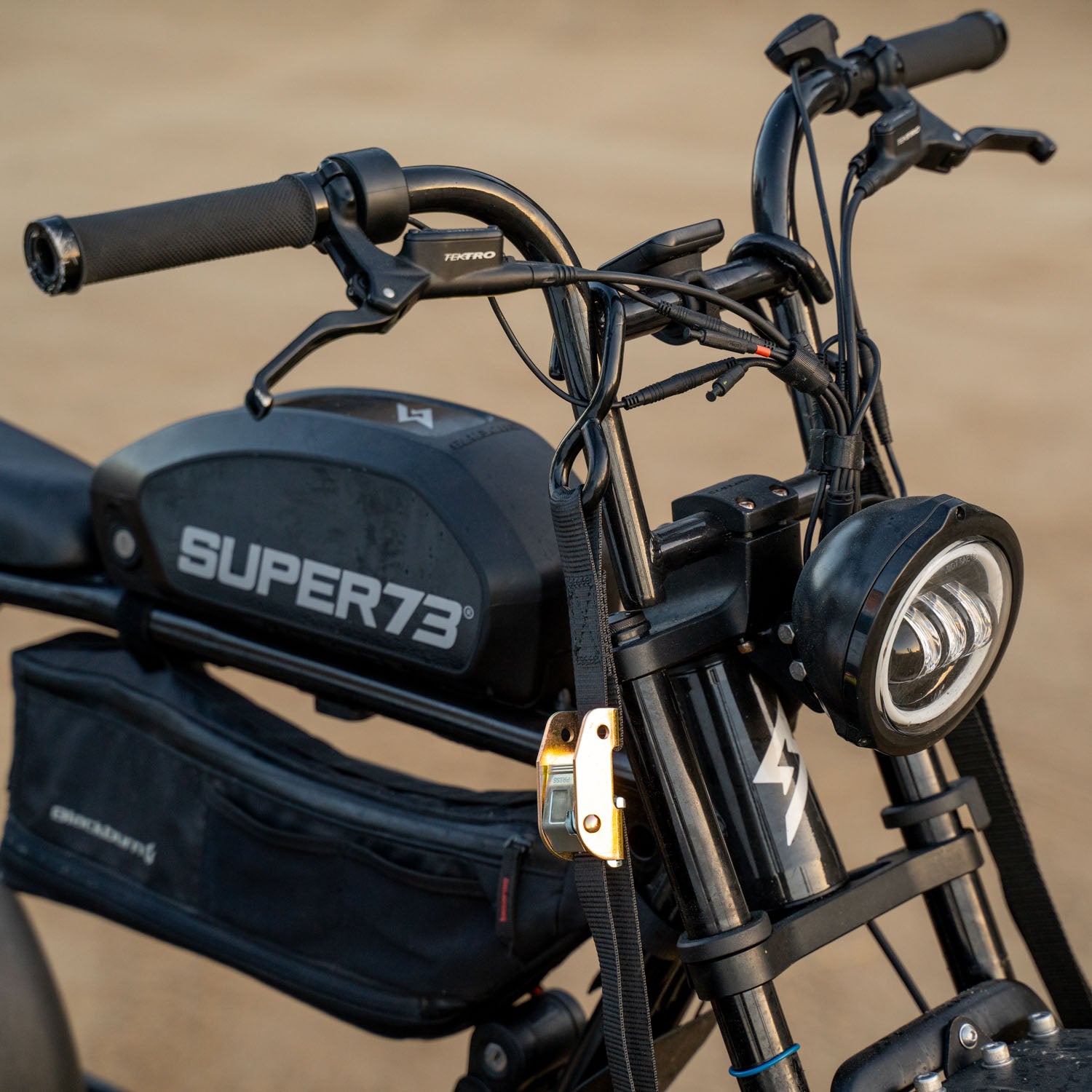
Direct Hook Connections
Some motorcycles have strong, dedicated tie-down points that allow the strap hook to connect directly to the bike.
Benefits
- Fastest setup.
- Minimal accessories required.
- Simple and effective.
Step 3. Choose the Rear Connection
Unlike the front tie-downs, the rear tie-down isn't designed to compress the suspension. Its primary job is to keep the rear tire firmly seated in the carrier so it cannot bounce, hop, or shift during transport.
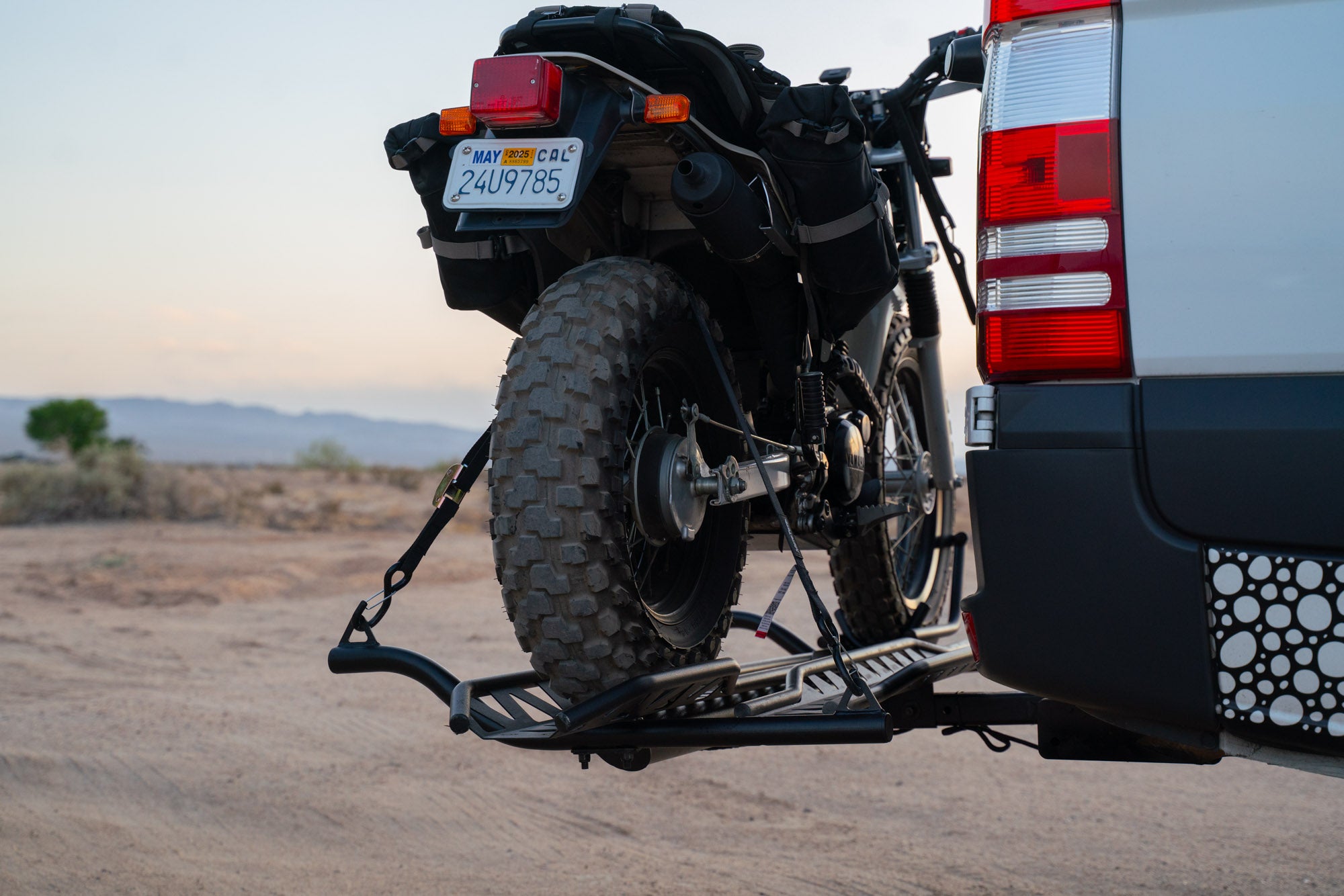
Rear Wheel Strap
A simple cam buckle strap that passes over the rear tire and anchors to both sides of the carrier.
Benefits
- Lightweight.
- Fast to install.
- Reliable.
- Great for most applications.
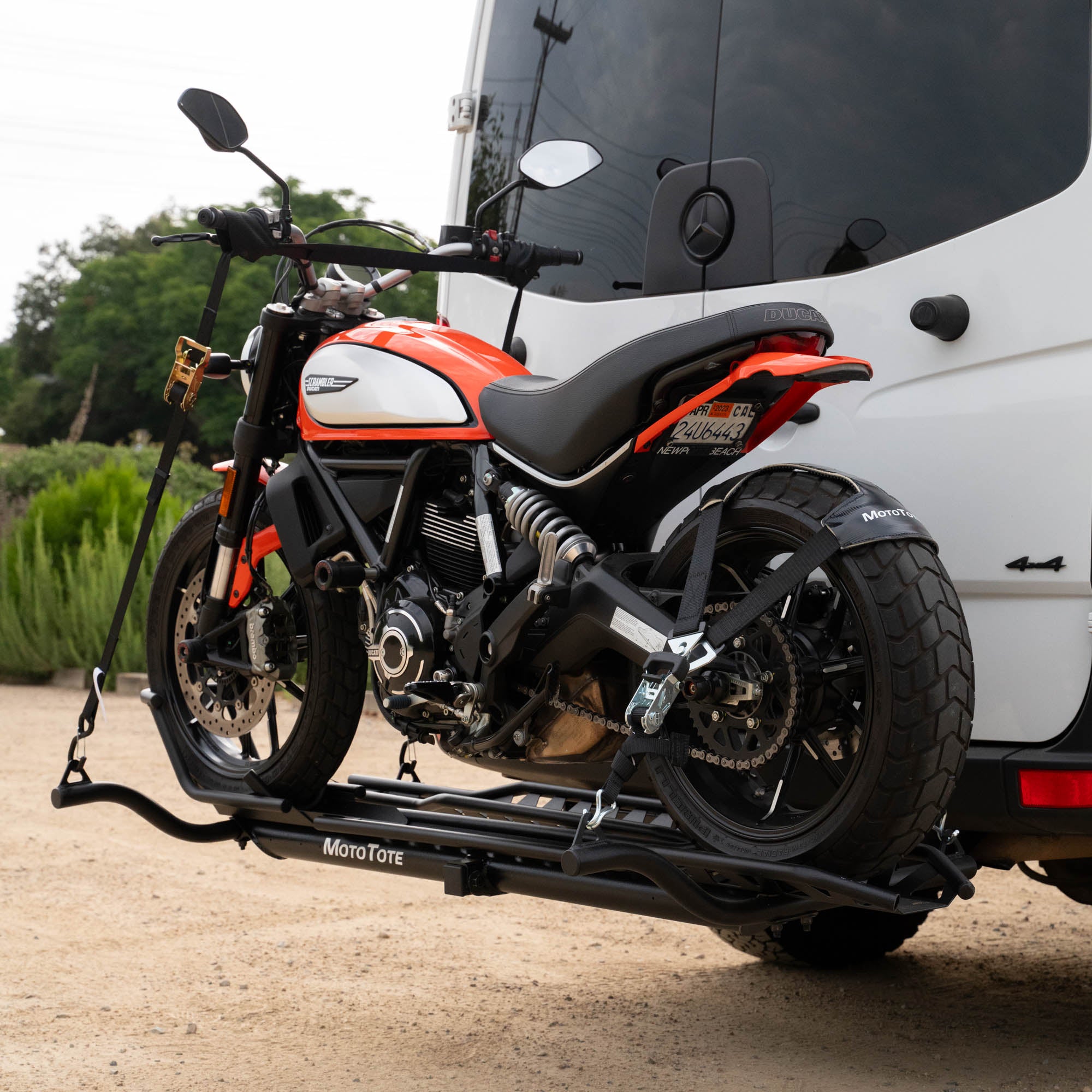
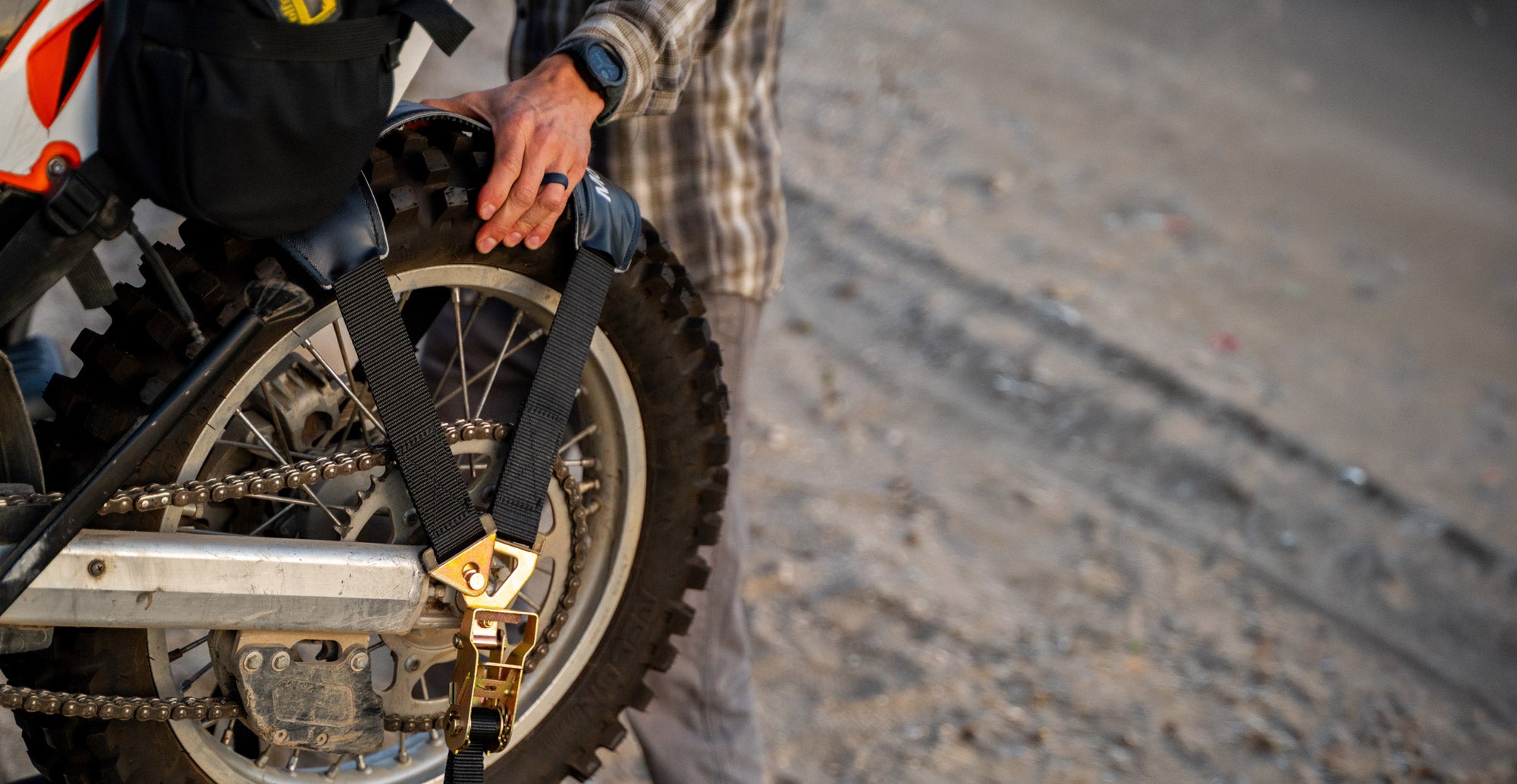
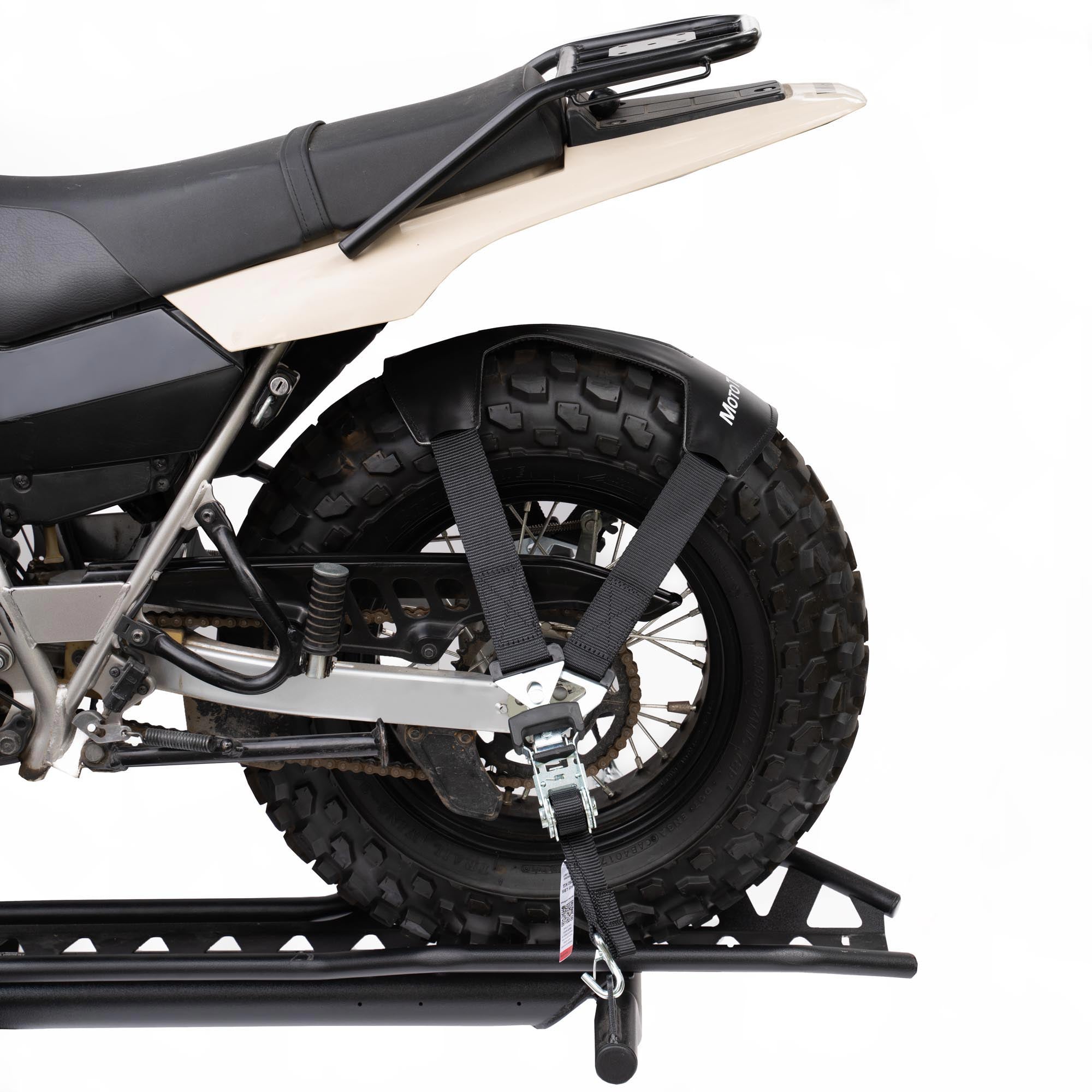
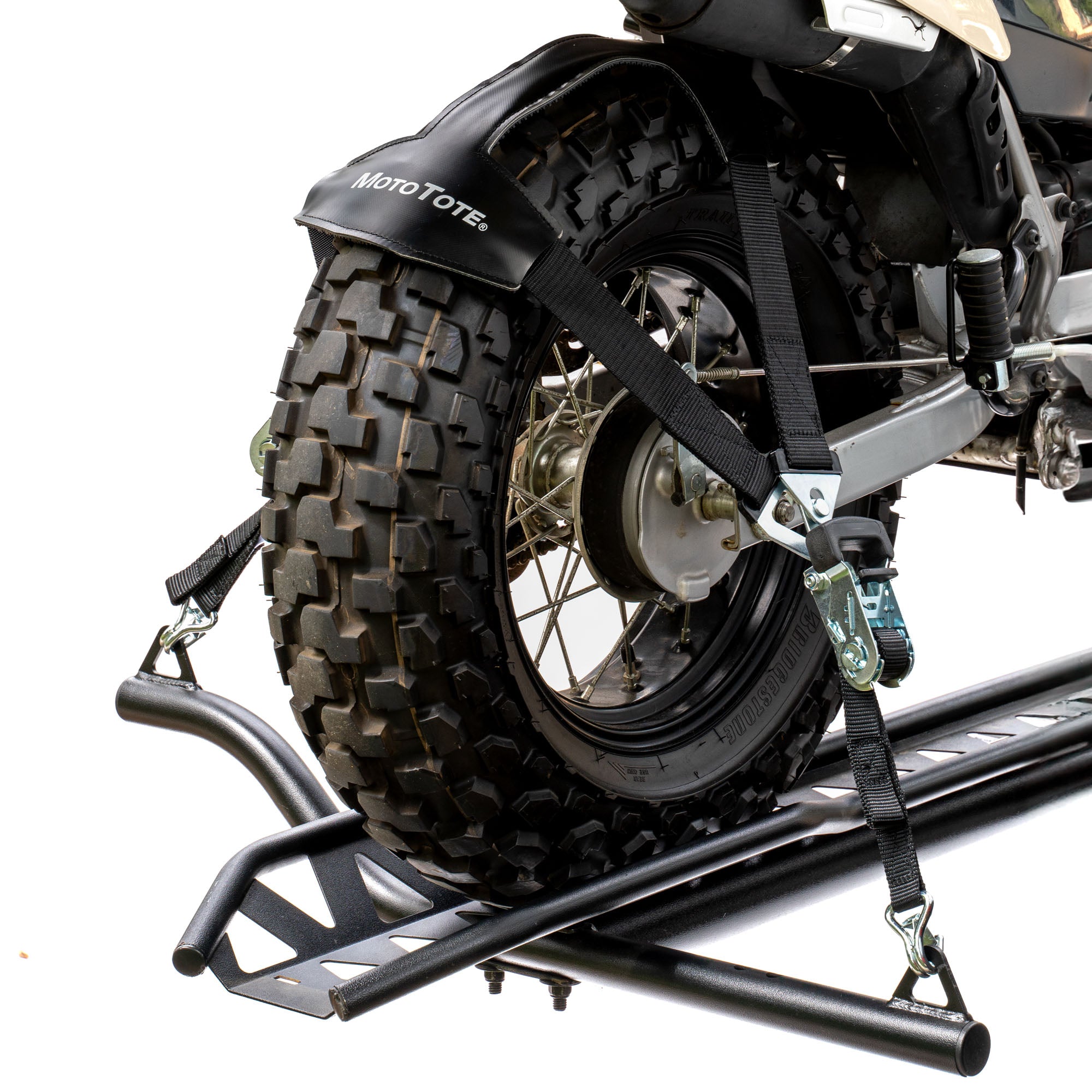
TireSling
The TireSling wraps around the rear tire rather than simply passing over it.
This creates more tire contact while pulling the wheel securely into the carrier, reducing movement and improving overall stability.
Benefits
- Greater tire contact.
- Increased downward holding force.
- Reduced tire movement.
- Excellent on rough roads.
- Maximum stability.
4. Build Your Ideal Tie-Down System
Combine the right components to create the perfect setup for your motorcycle.
Now that you understand how each component works, it's time to put everything together.

Tie-Down Mechanism

Front Connection

Rear Connection
TireSling Ratcheting
Motorcycle Tie Down
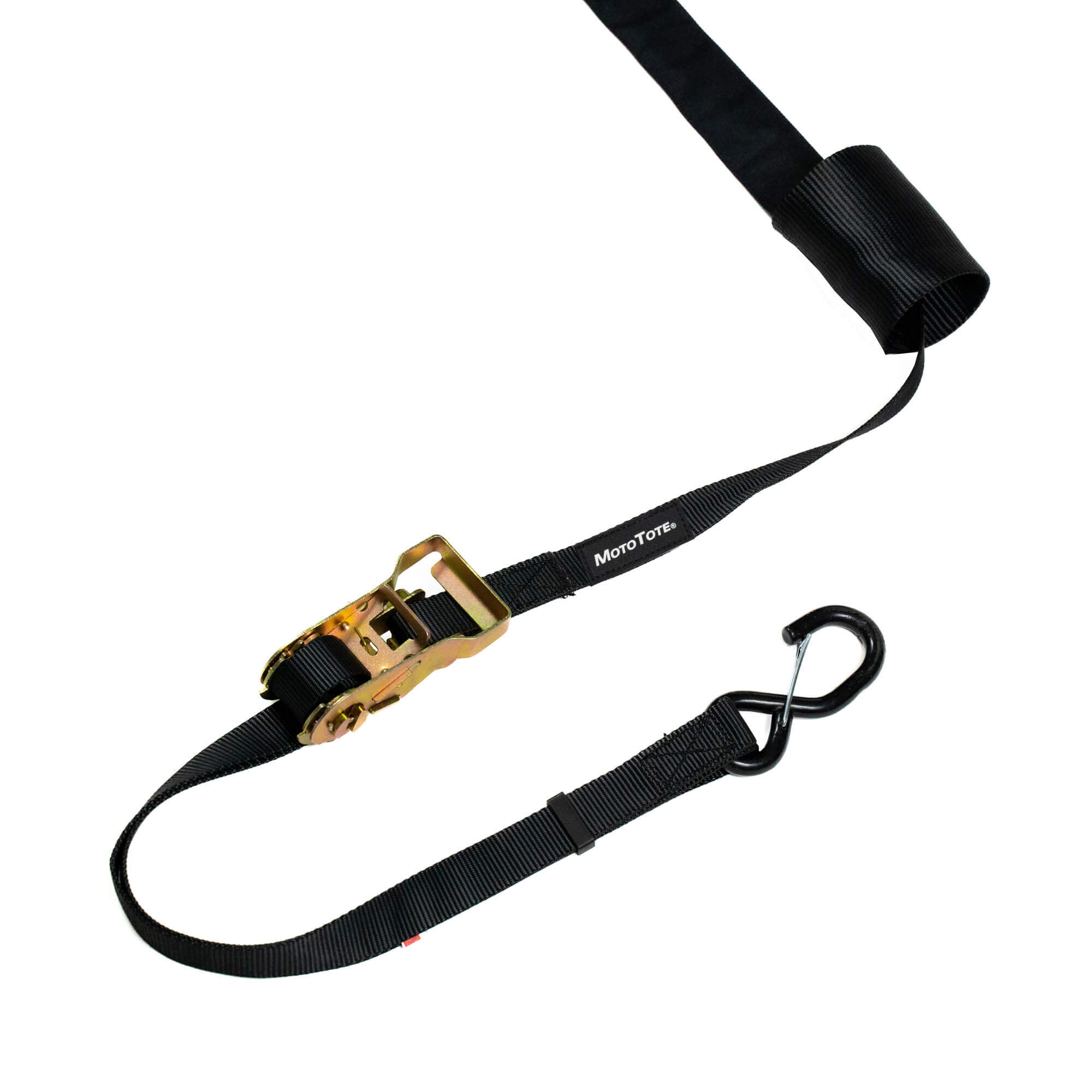
Heavy duty, maximum-stability tire tie down with a ratcheting lever designed for motorcycles with a 645 lb. working load limit.
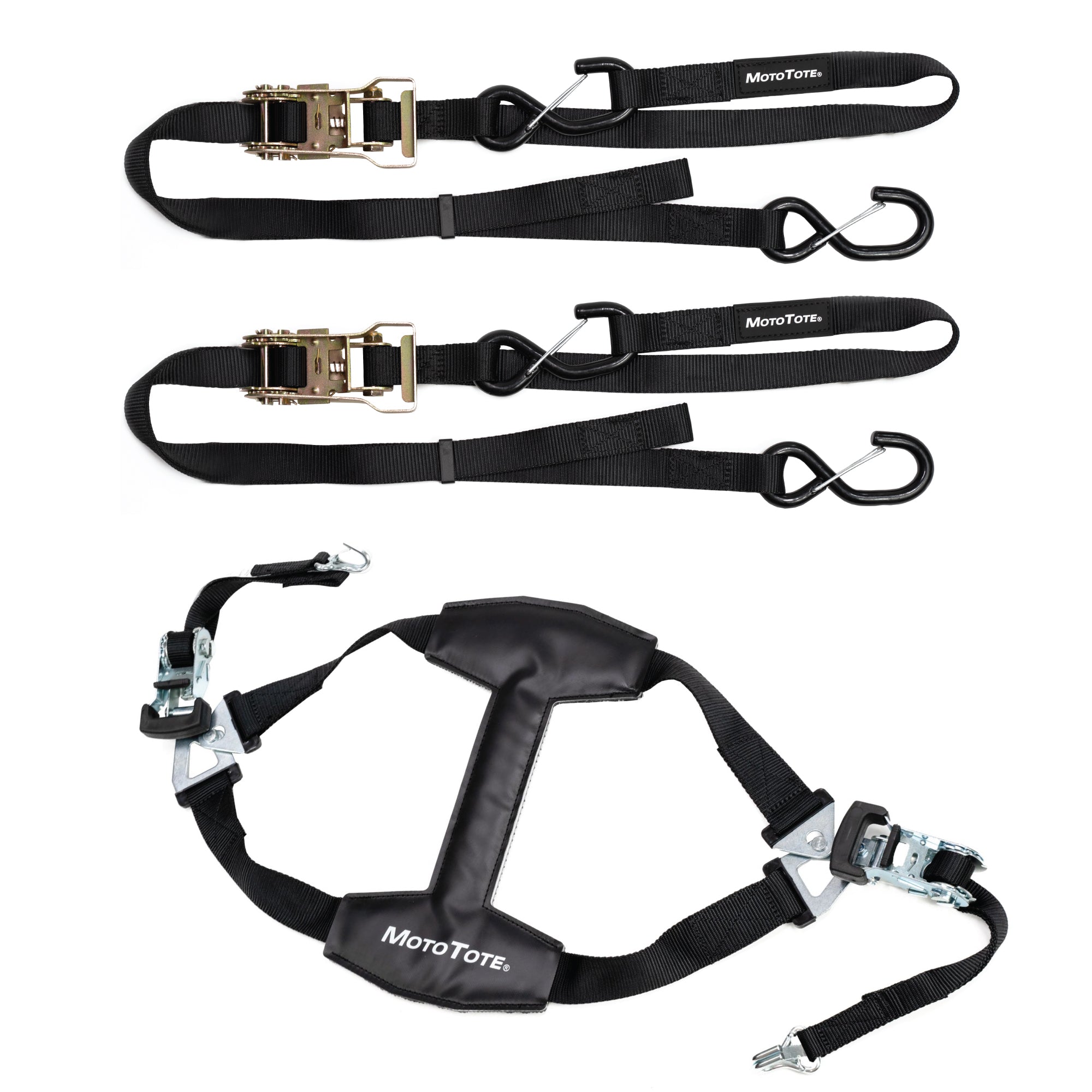
HandleCuff Ratcheting
Motorcycle Tie Downs
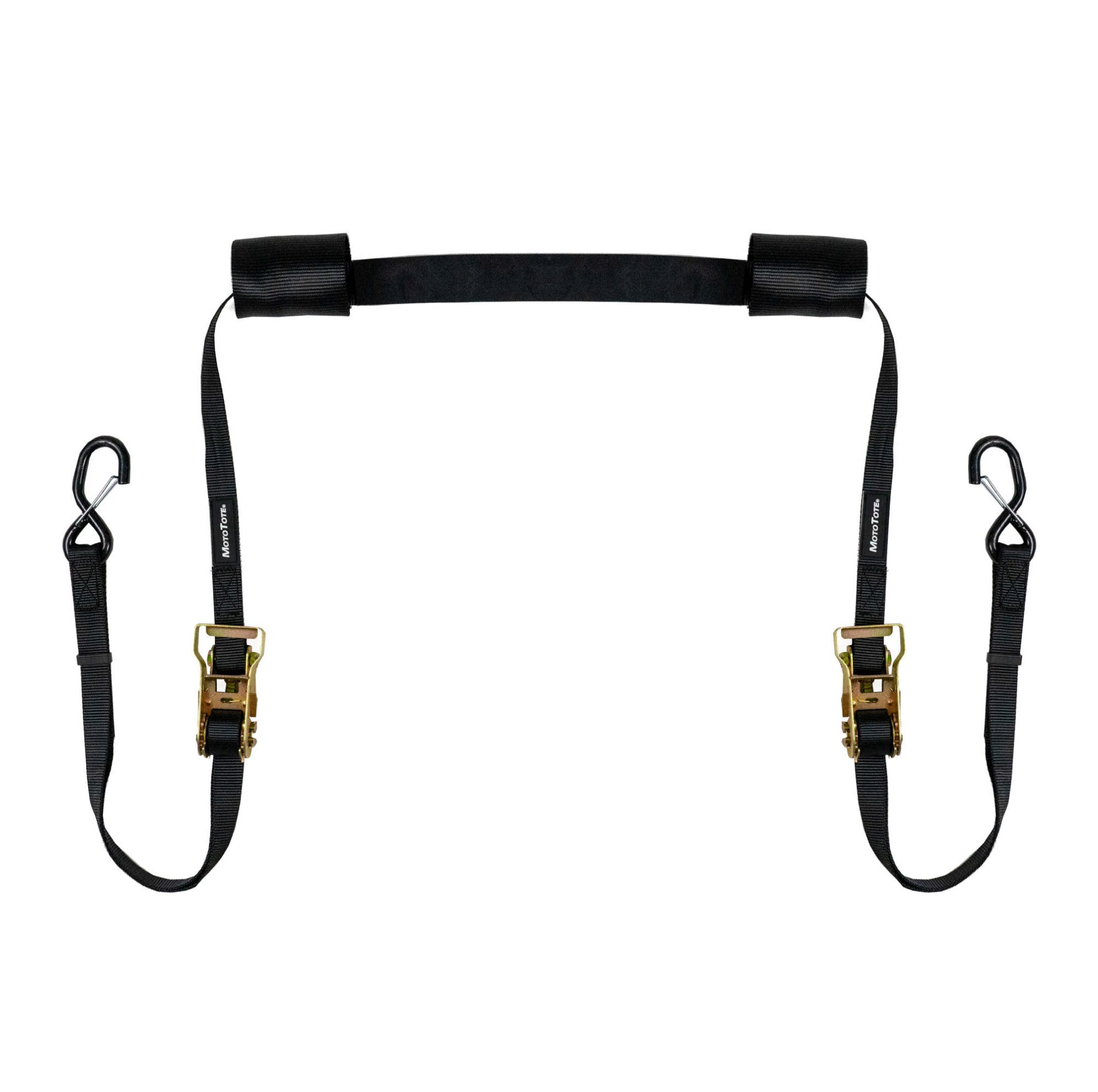
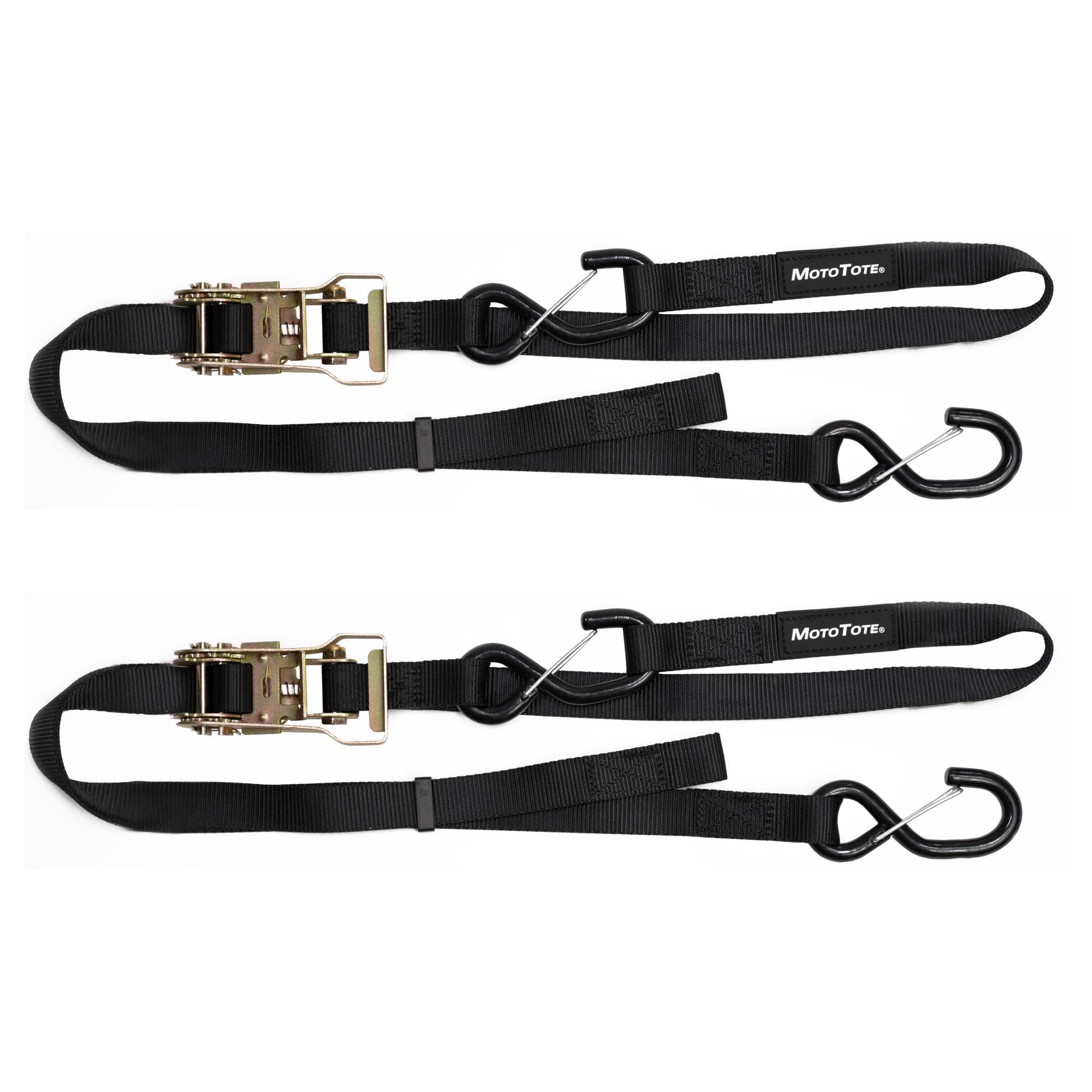
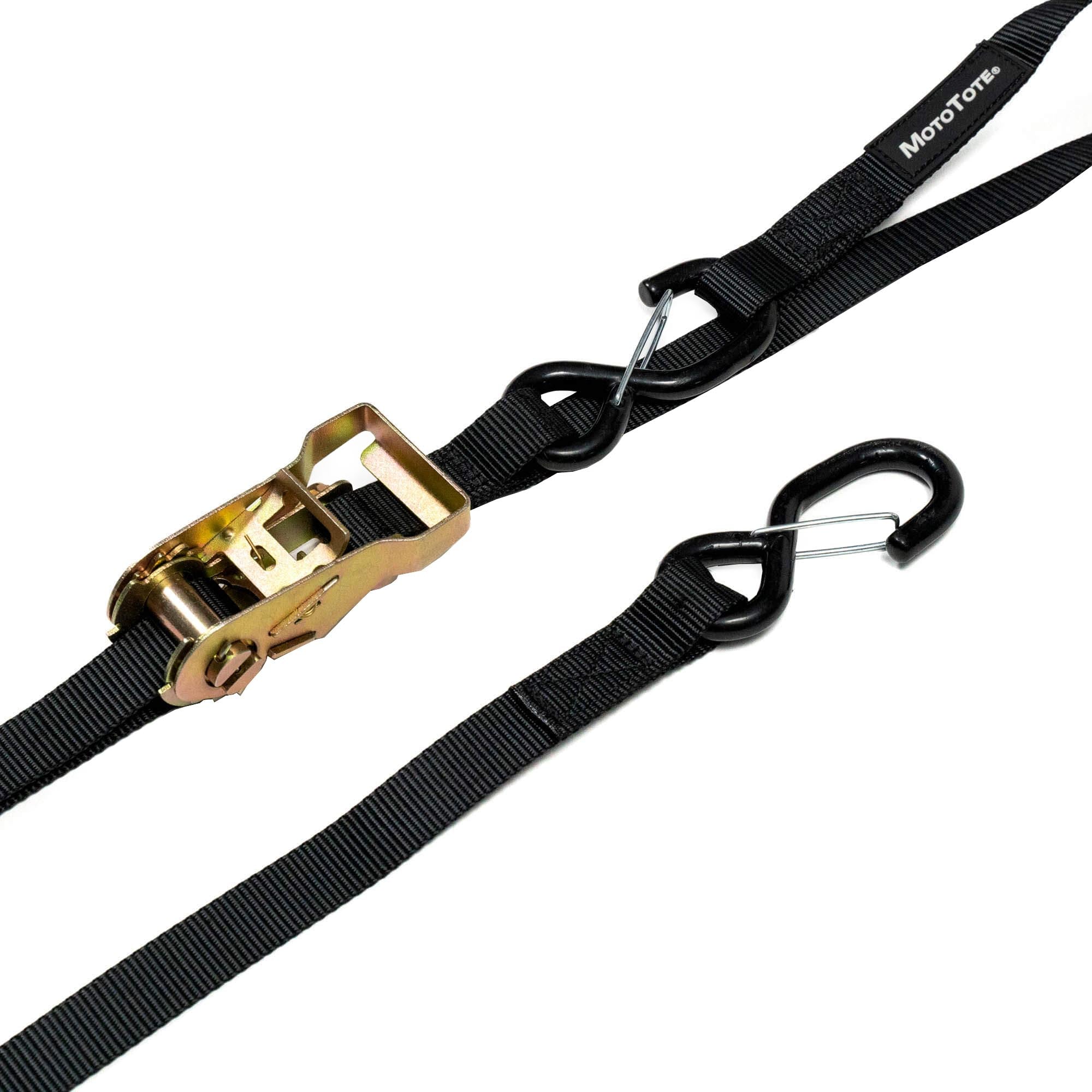
Handlebar cuff tie-down system with a ratcheting lever connects to handlebar grips up to 32" and has a 1,390 lb. working load limit.
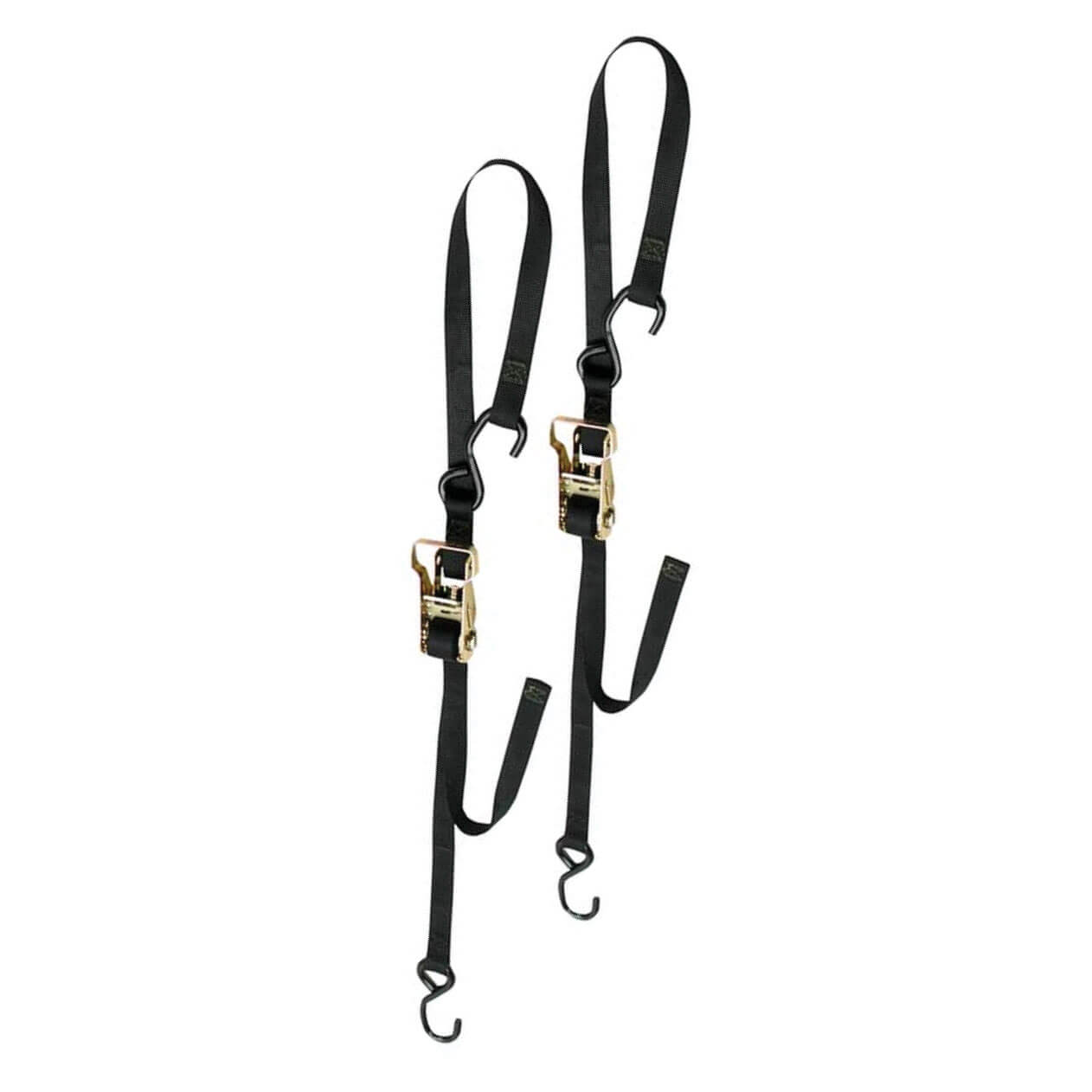
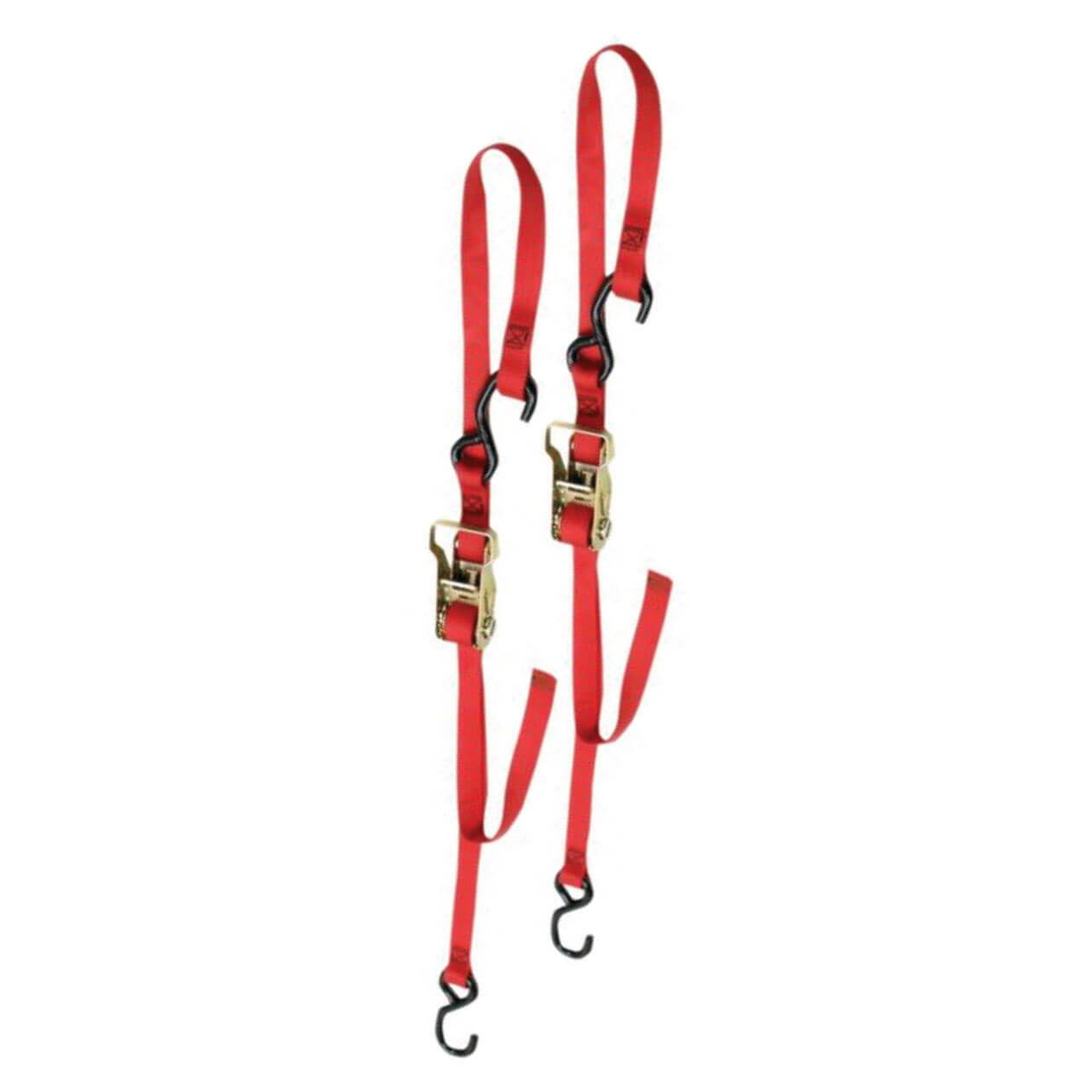
SafeLoop Ratcheting
Motorcycle Tie Downs
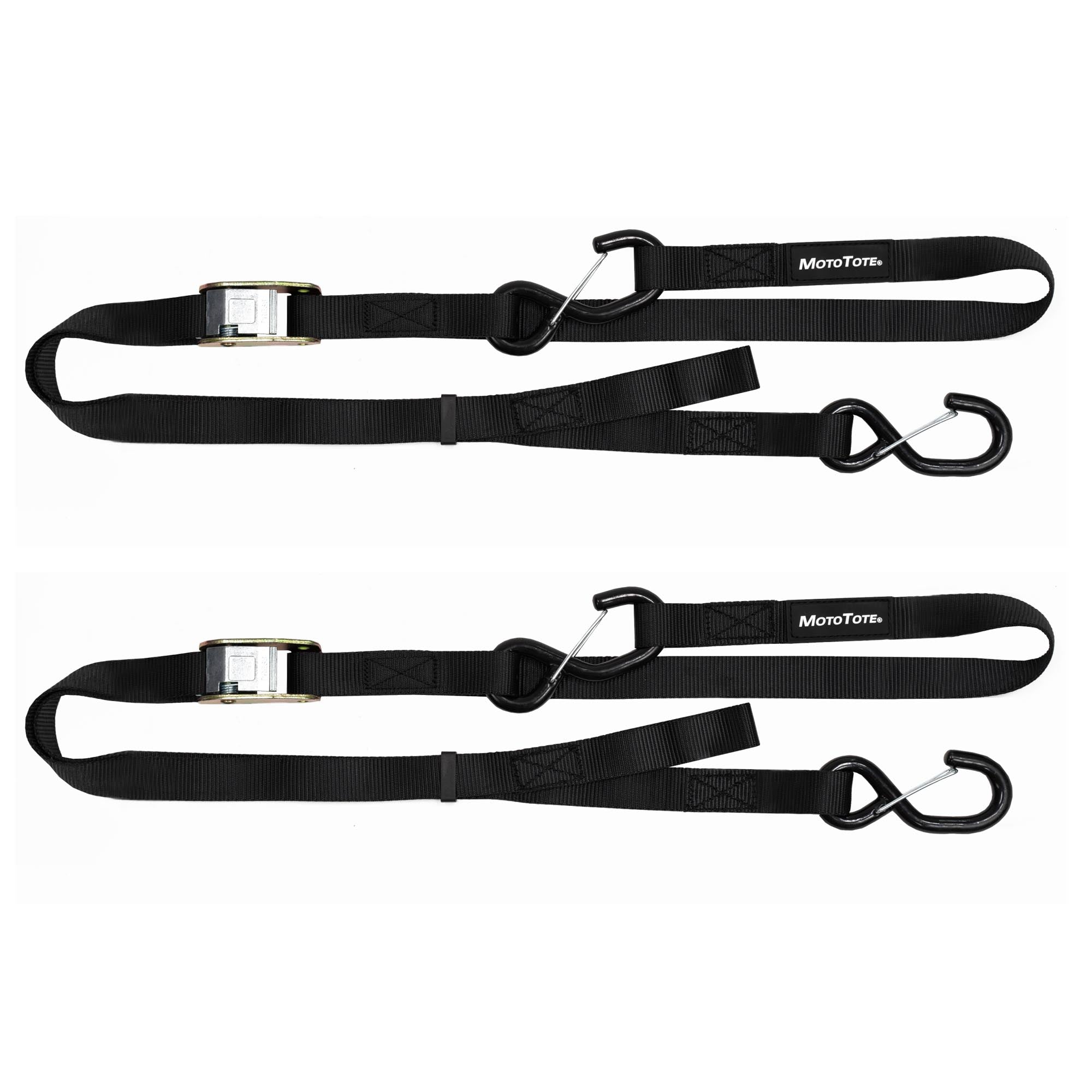
Locking, soft-loop motorcycle tie-downs with a ratcheting lever designed for motorcycle carriers with a 1,130 lb. working load limit.
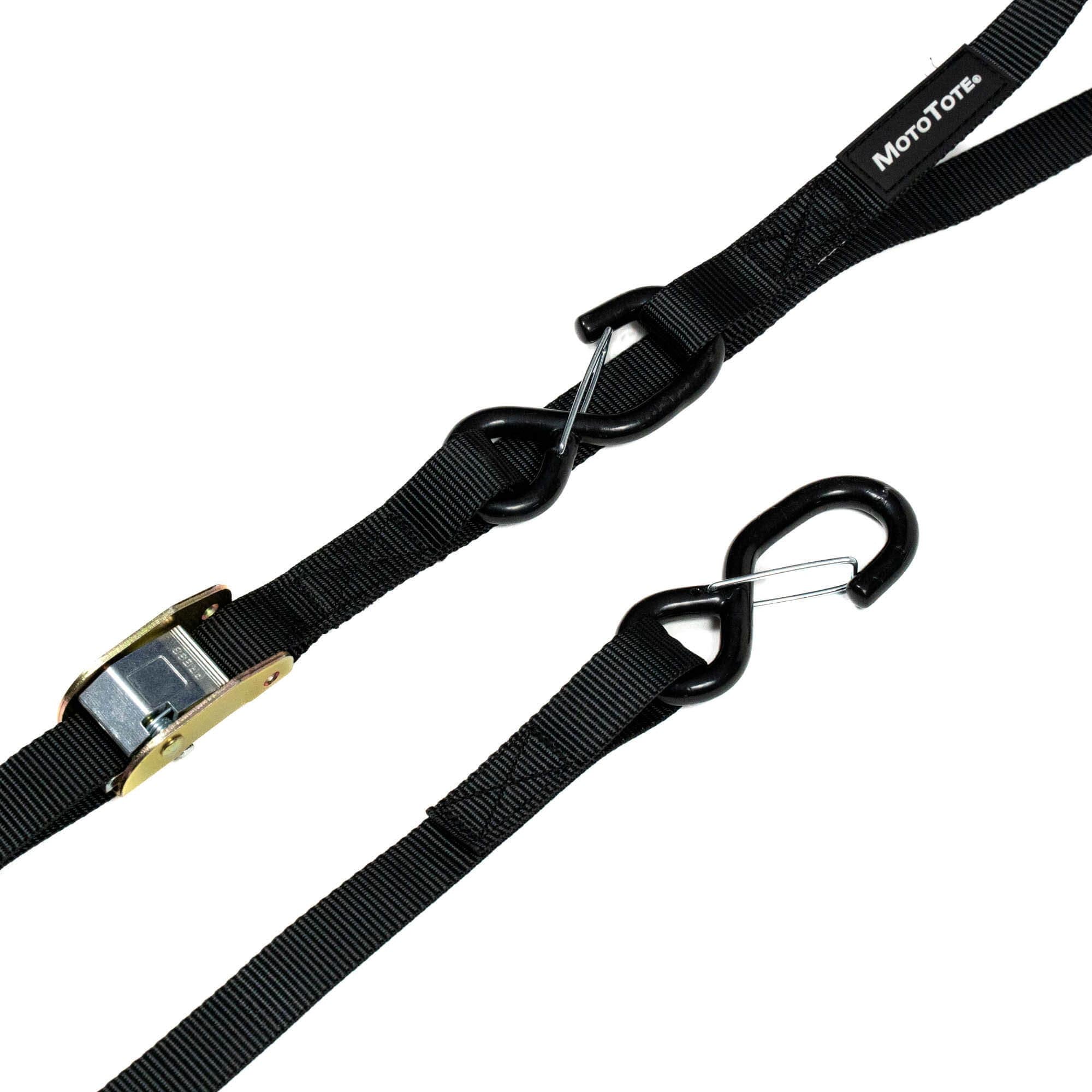
SafeLoop Cam Buckle
Motorcycle Tie Downs
Locking, soft-loop tie-downs with a spring loaded lever designed for motorcycle carriers with a 720 lb. working load limit.


Cam Buckle
Motorcycle Tie Downs
Locking, s-hook tie-downs with a spring-loaded lever designed for motorcycle carriers with a 585 lb. working load limit.


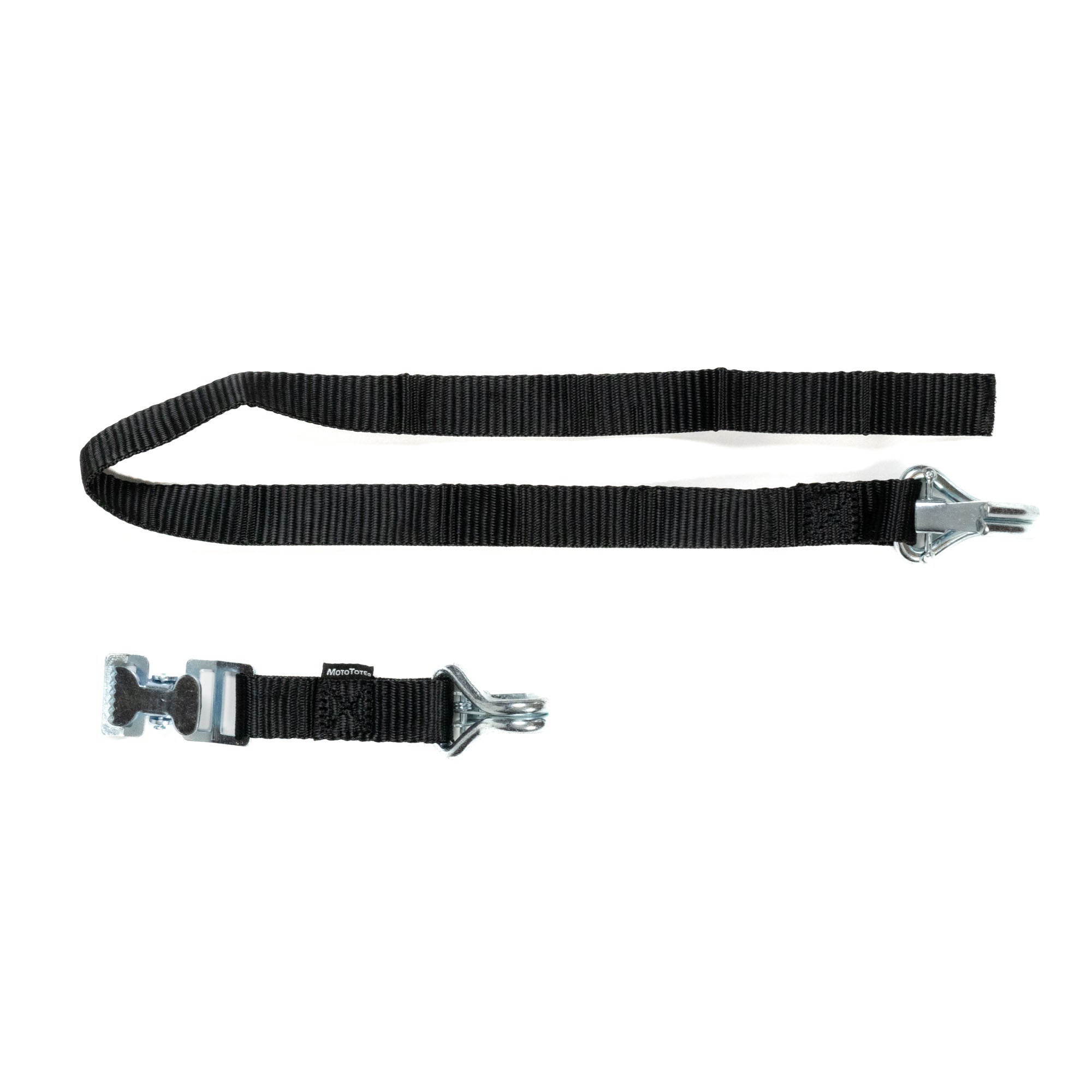
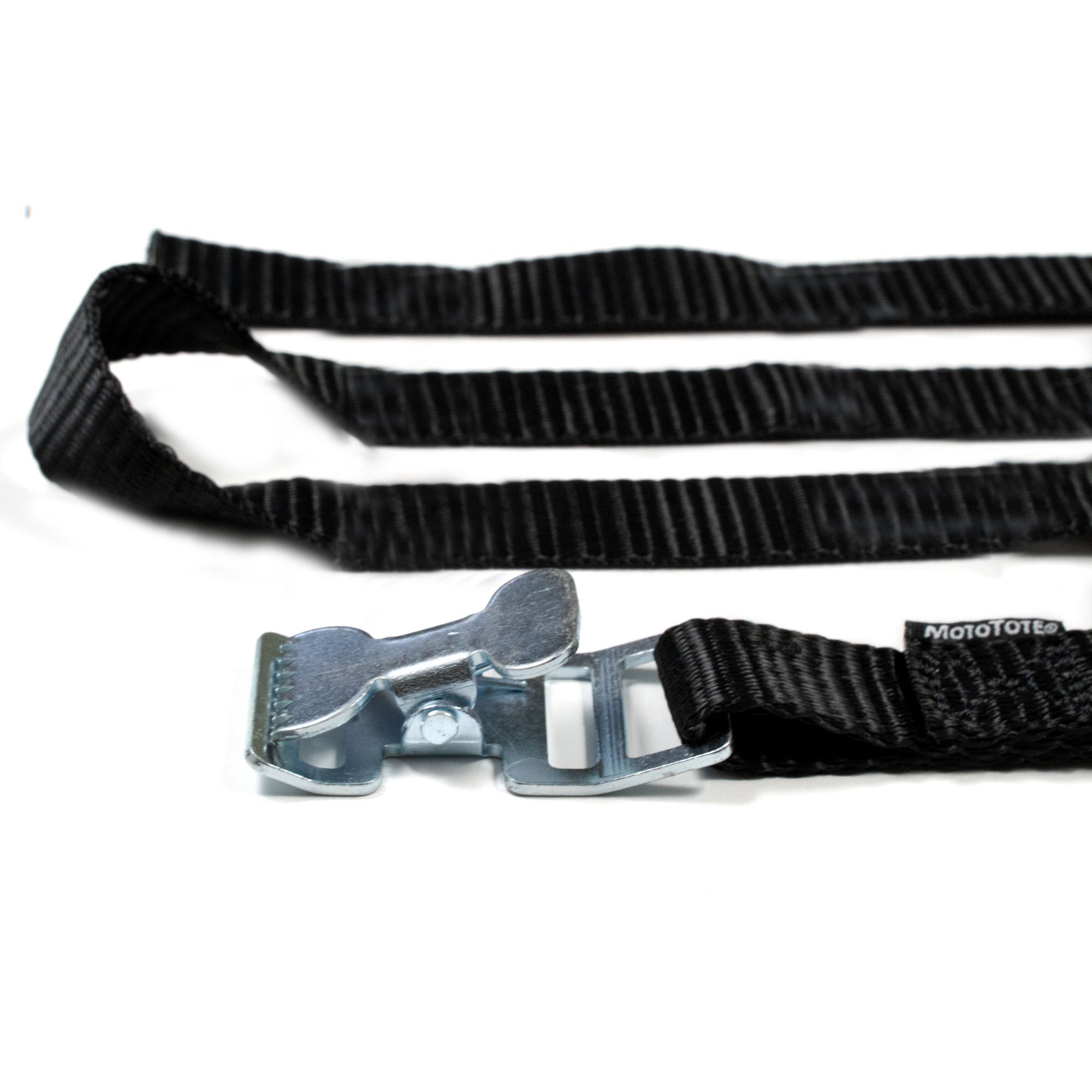
TireStrap Cam Buckle
Motorcycle Tie Downs
Locking, s-hook tie-down strap with a spring-loaded lever secures rear tires to motorcycle carriers with a 585 lb. working load limit.
TireBelt
Motorcycle Tie Down
Simple rear wheel tire belt with a spring-loaded buckle for motorcycles, dirt bikes, scooters & electric bikes with a 70 lb. working load limit.
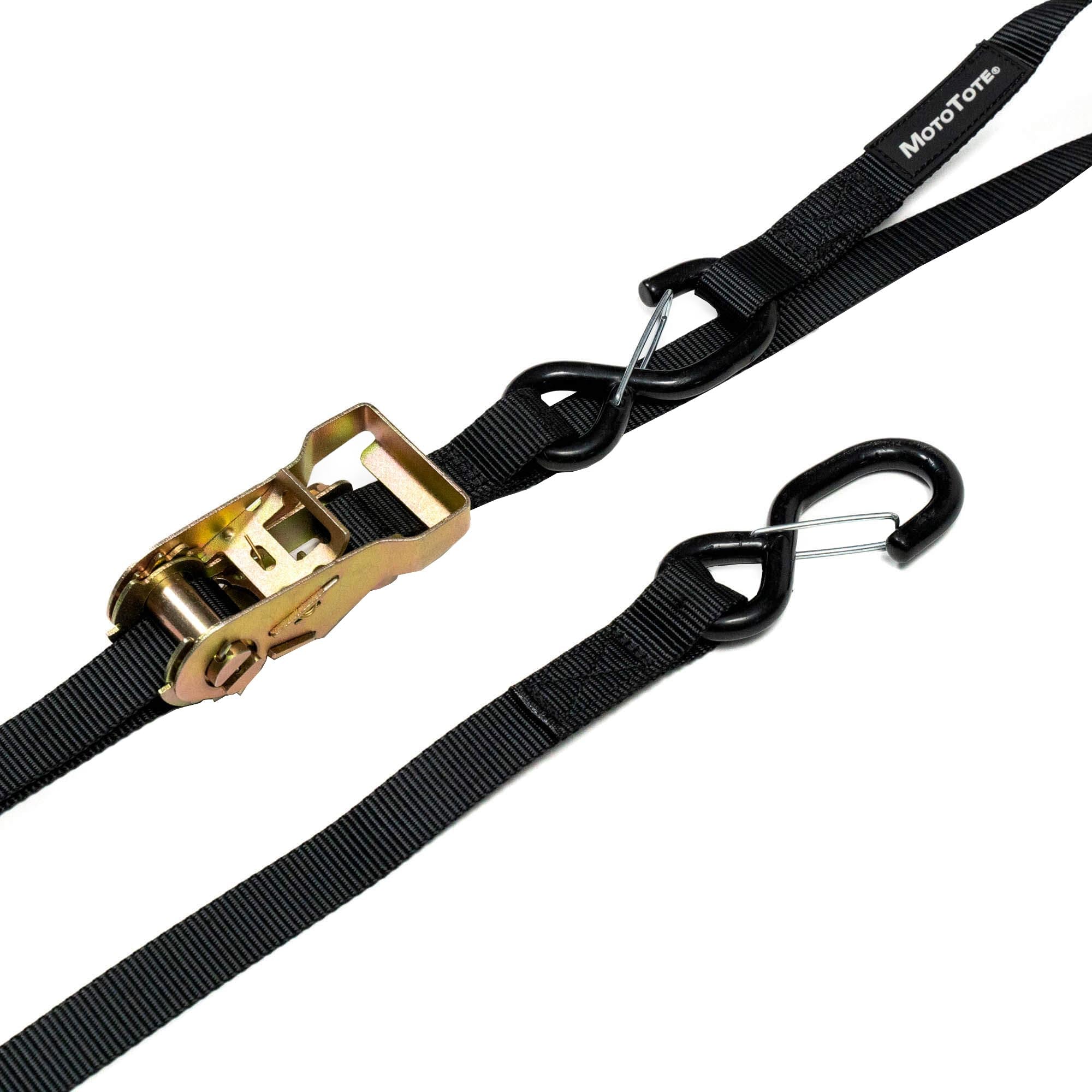
Deluxe
Tie Down Bundle
Premium motorcycle tie down bundle secures handlebars with soft loop, ratcheting tie downs and rear tires with an innovative wheel strap.
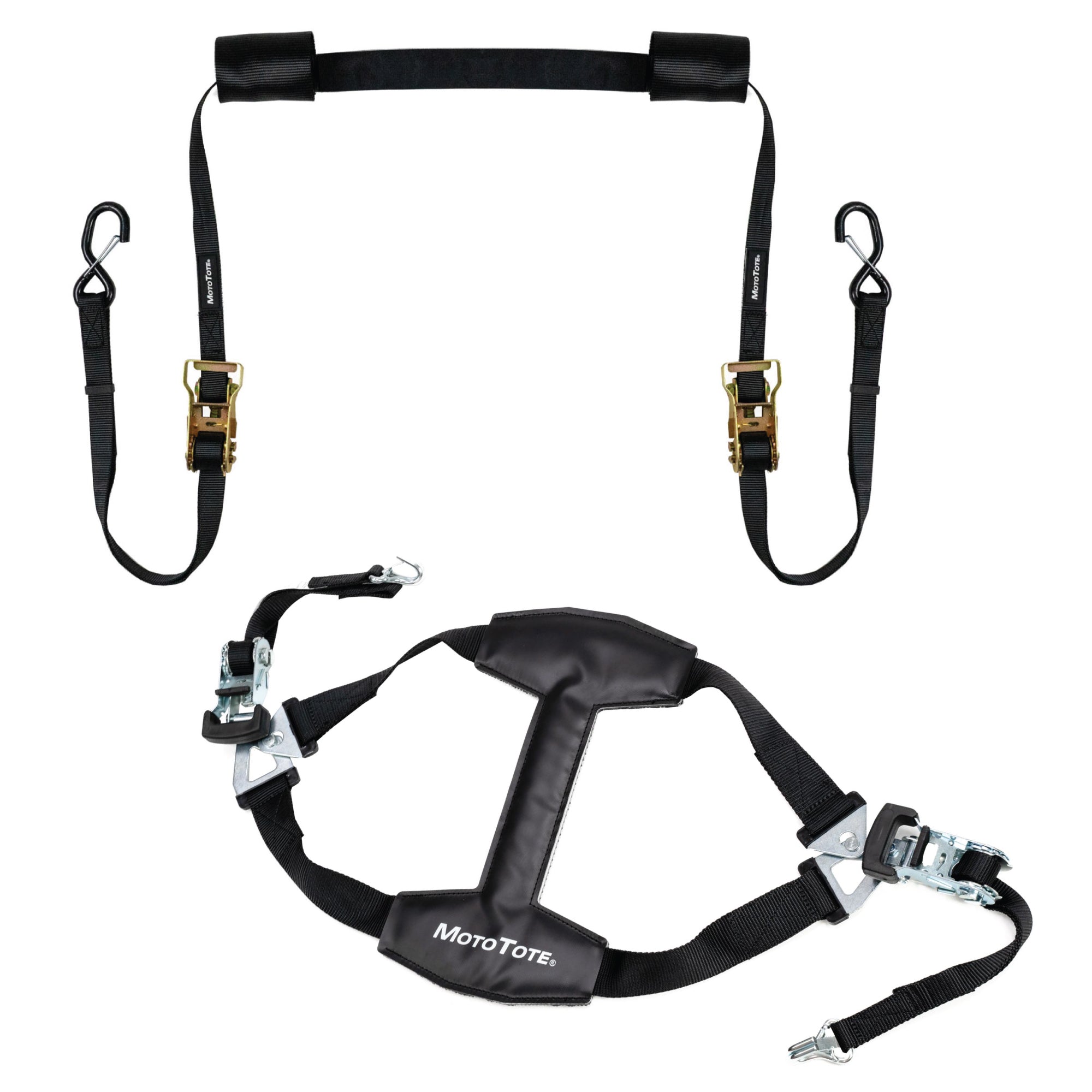
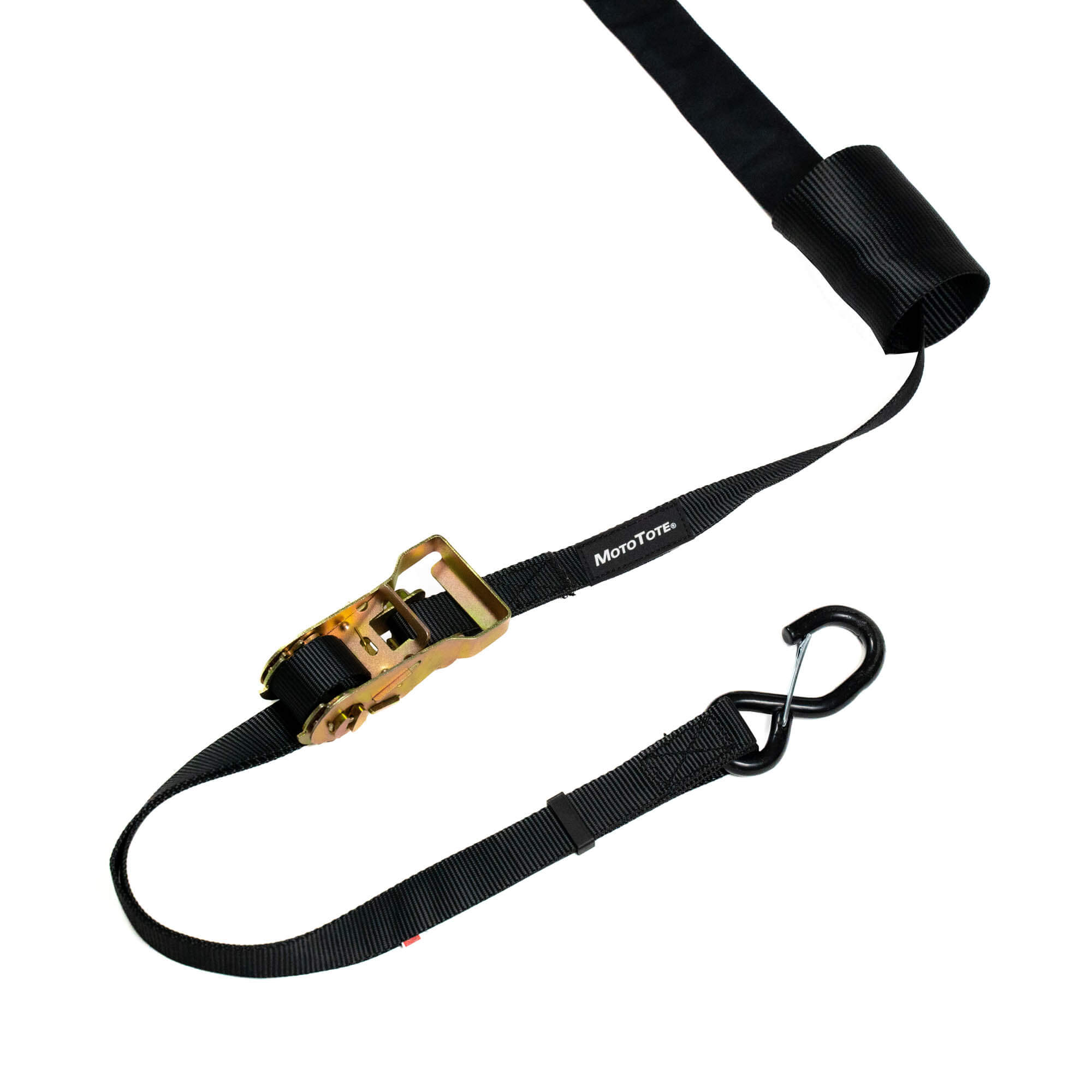
Sport Bike
Tie Down Bundle
Sport motorcycle tie-down bundle secures handlebars with specialized handle grip ratcheting tie-down and rear tires with an innovative wheel strap.
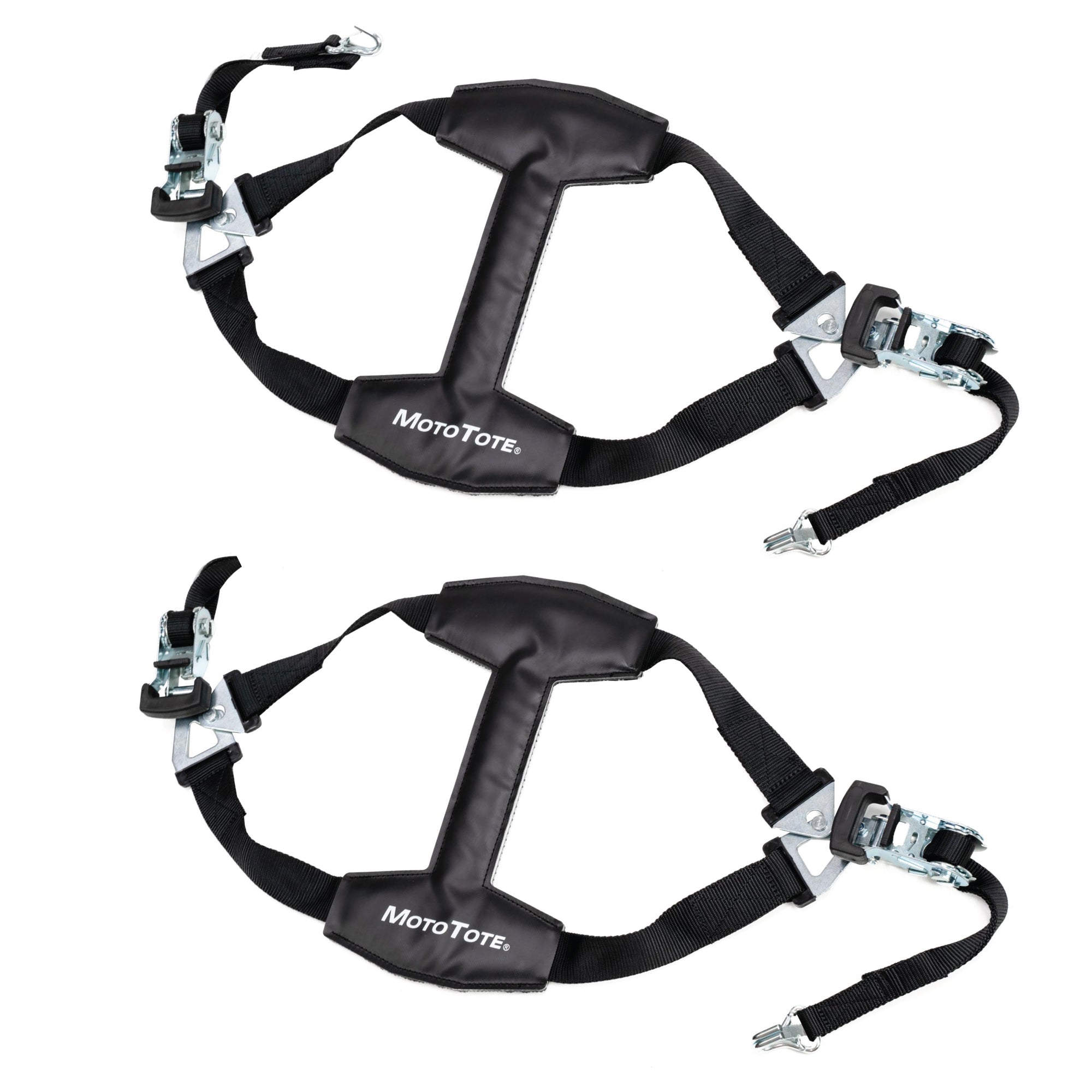
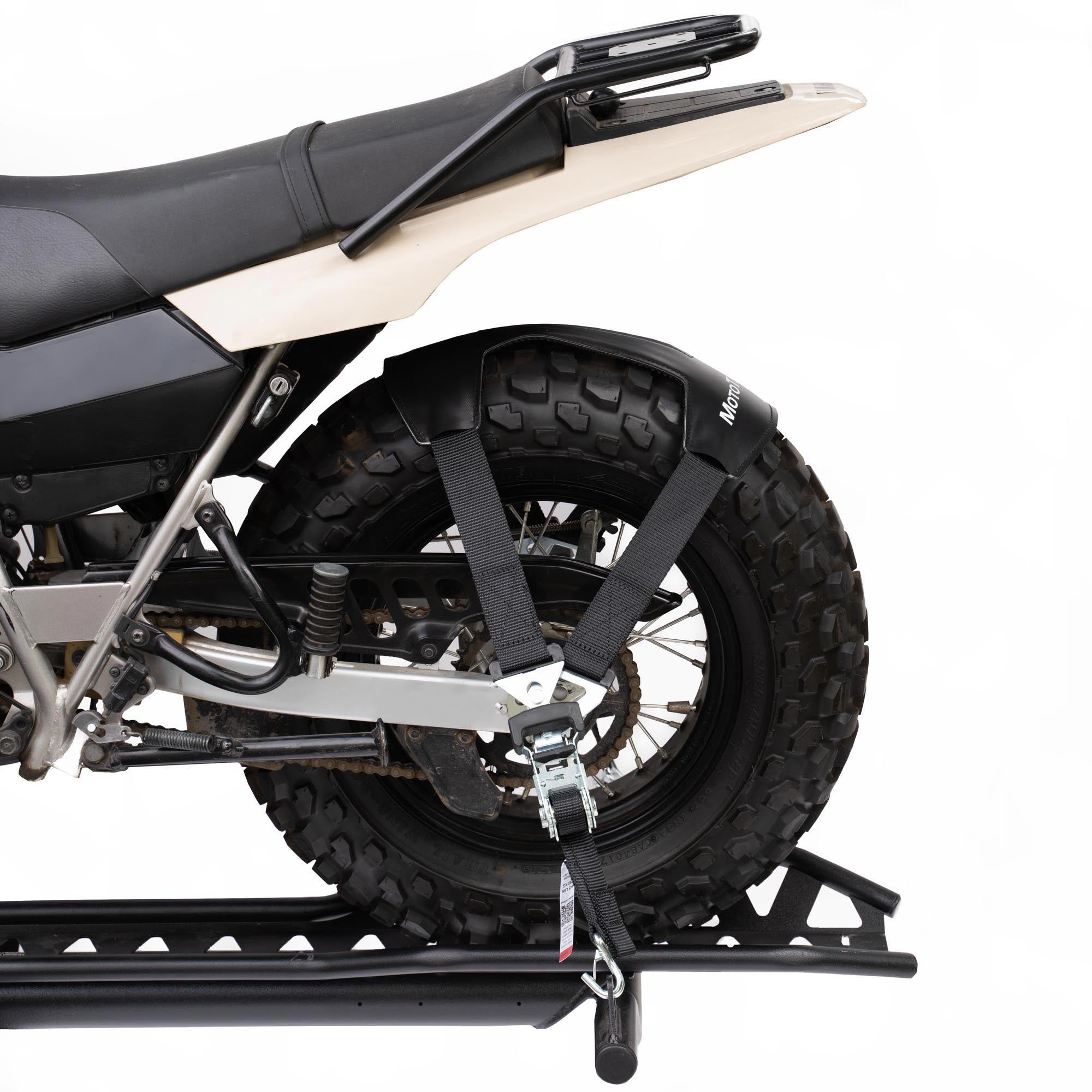
No Fender Deluxe
Tie Down Bundle
Innovative motorcycle tie down system secures both front and rear tire with two ratcheting wheel straps that harness directly to the tire.
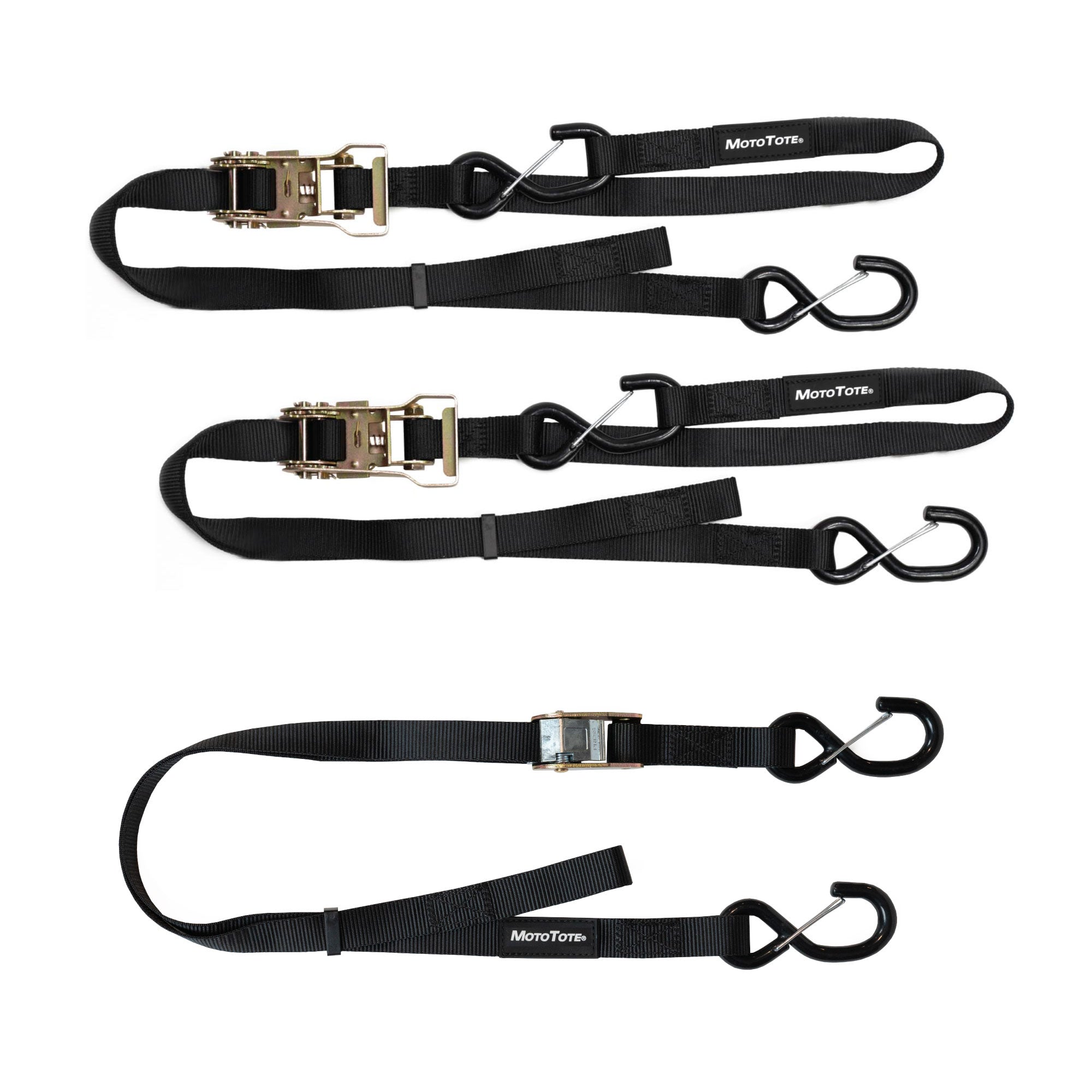
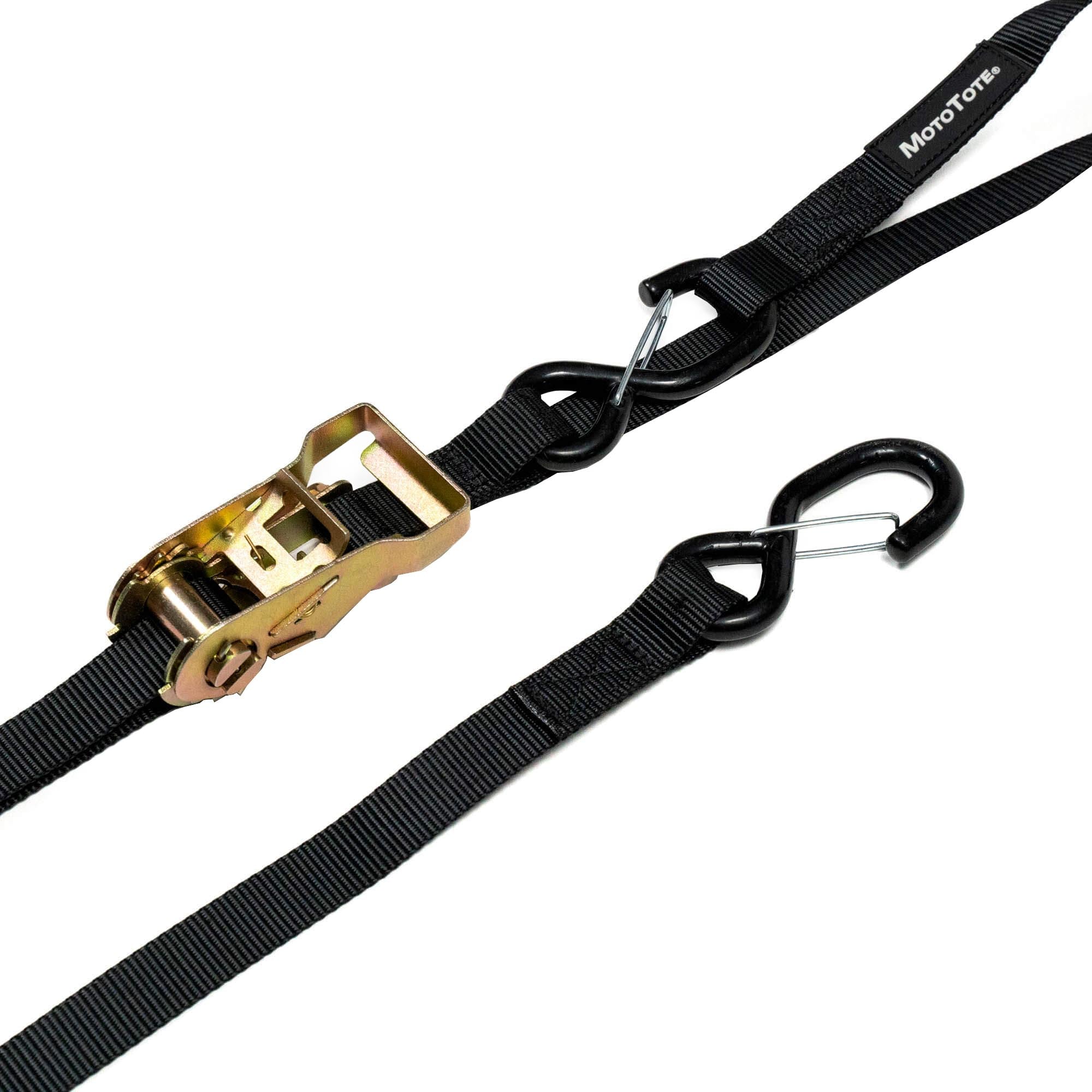
Universal
Tie Down Bundle
Versatile motorcycle tie-down bundle secures handlebars with soft loop, ratcheting tie-downs and rear tires with a locking, s-hook tie-down strap.
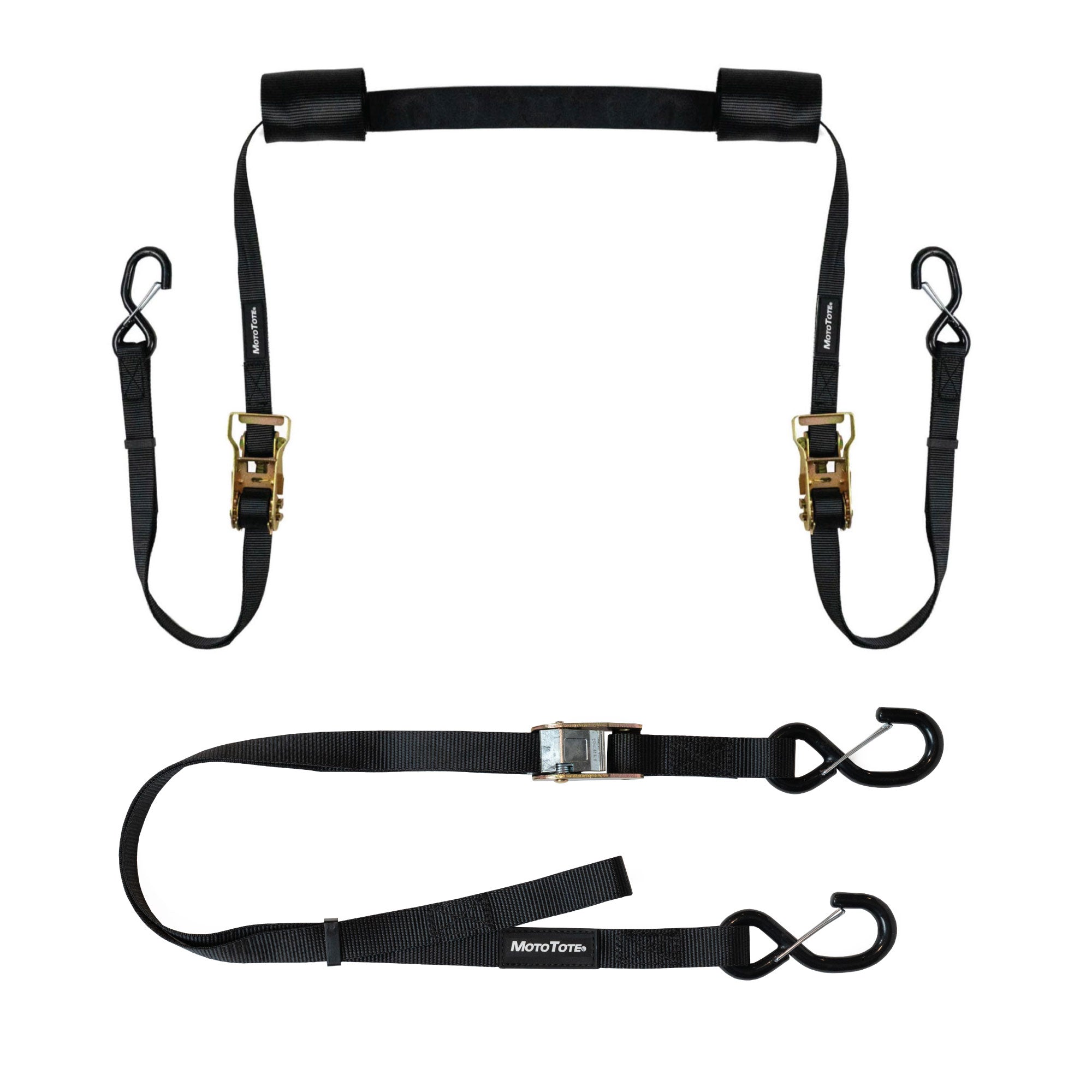
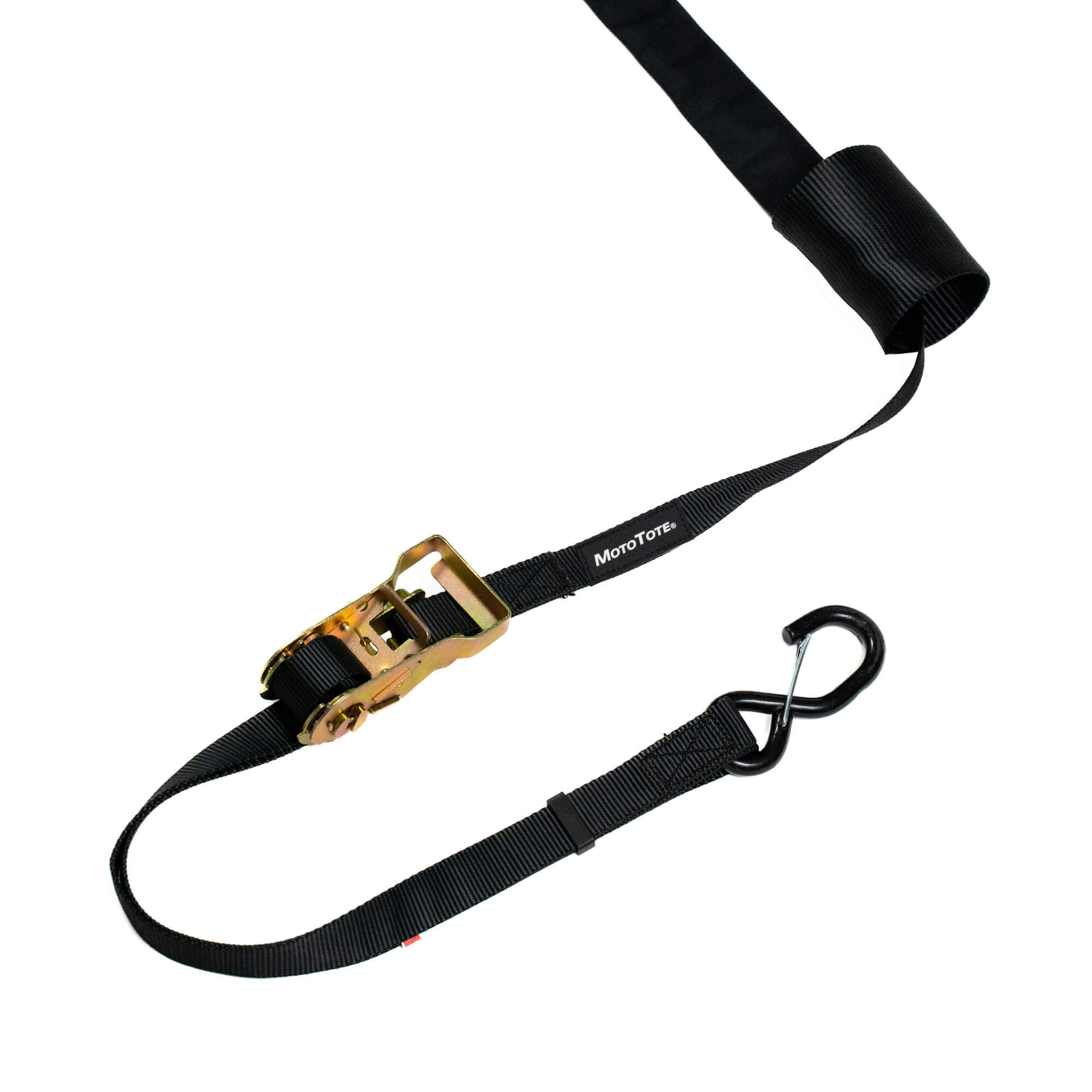
Scooter
Tie Down Bundle
Scooter bundle secures handlebar with specialized bar straps and rear tires with a locking, s-hook tie-down strap.
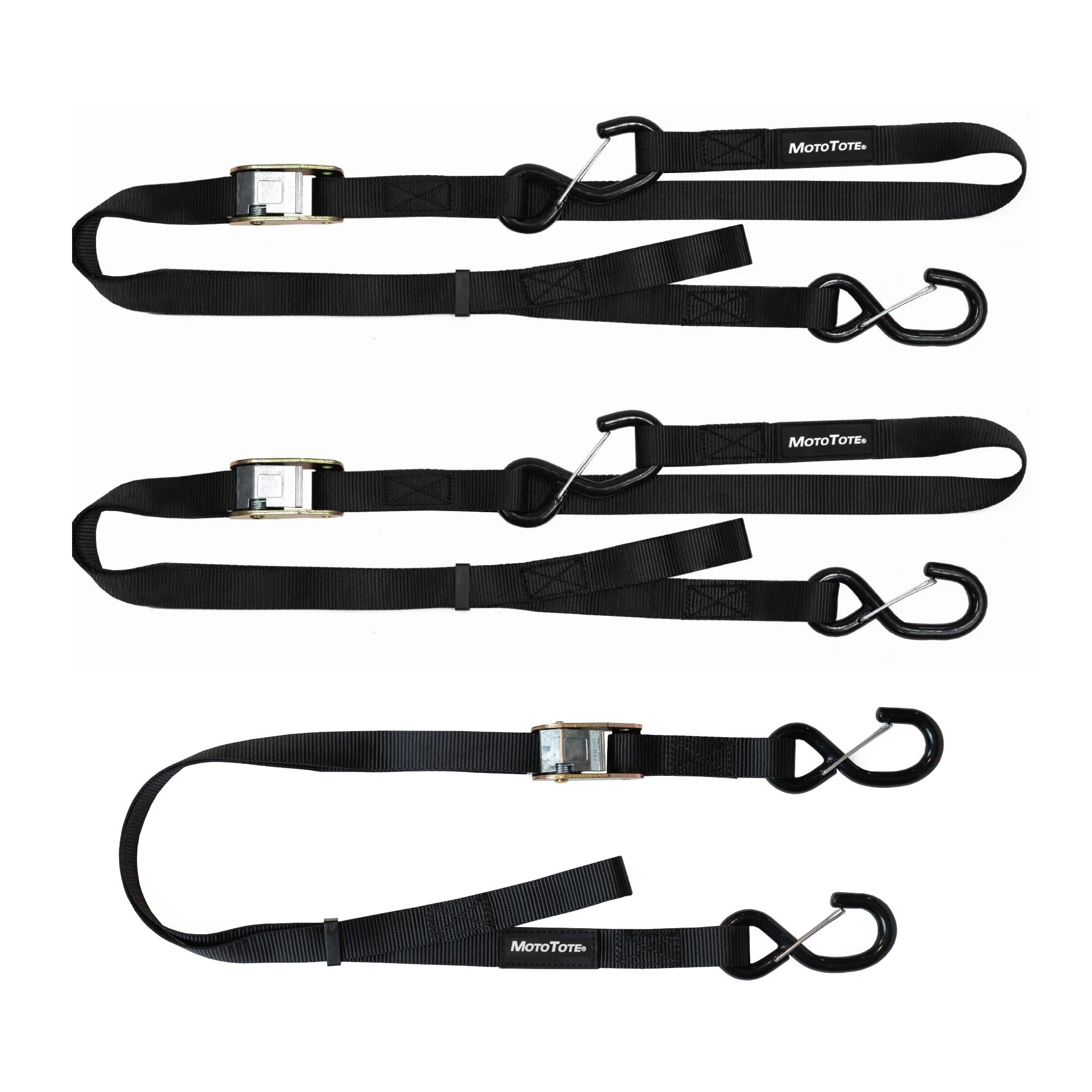
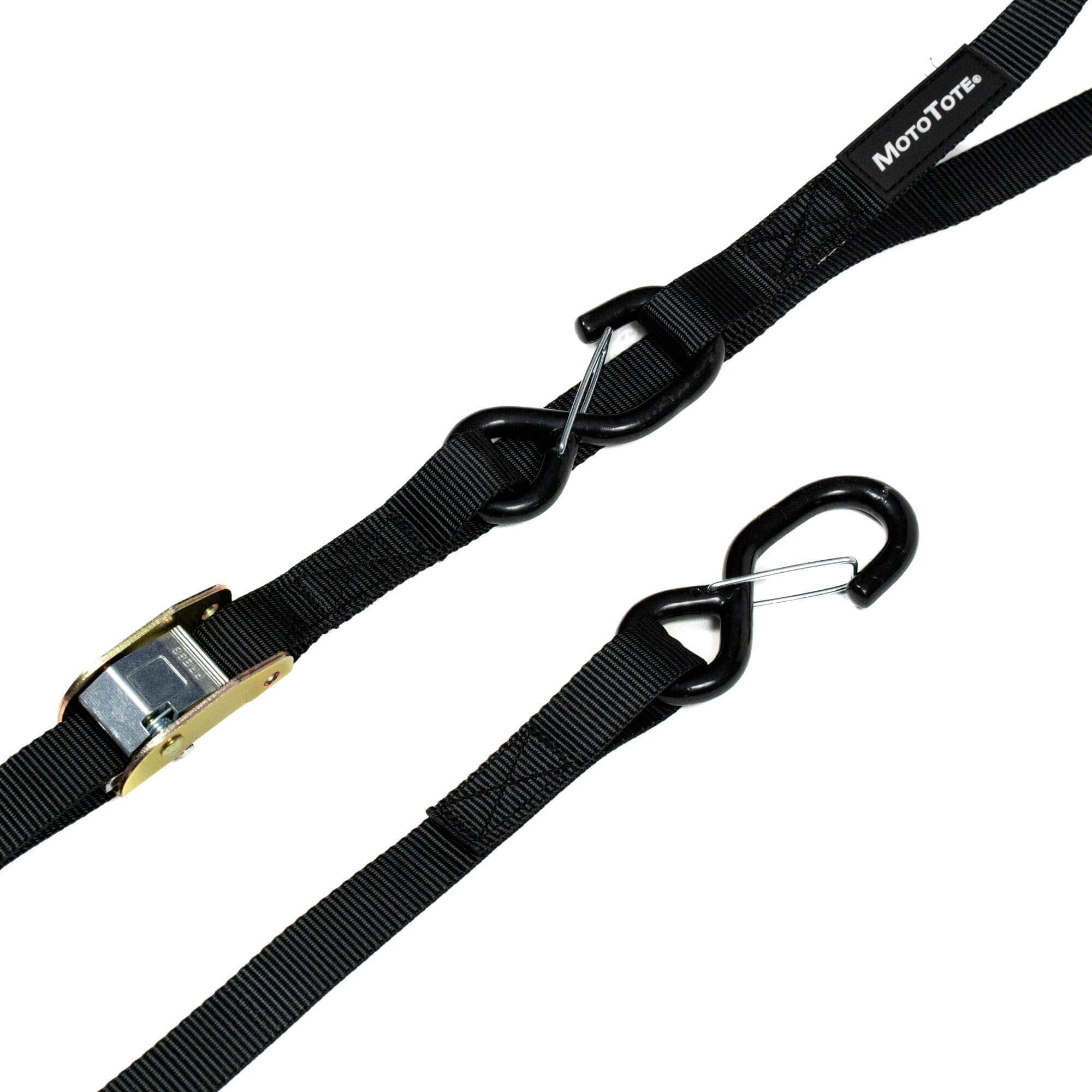
Basic
Tie Down Bundle
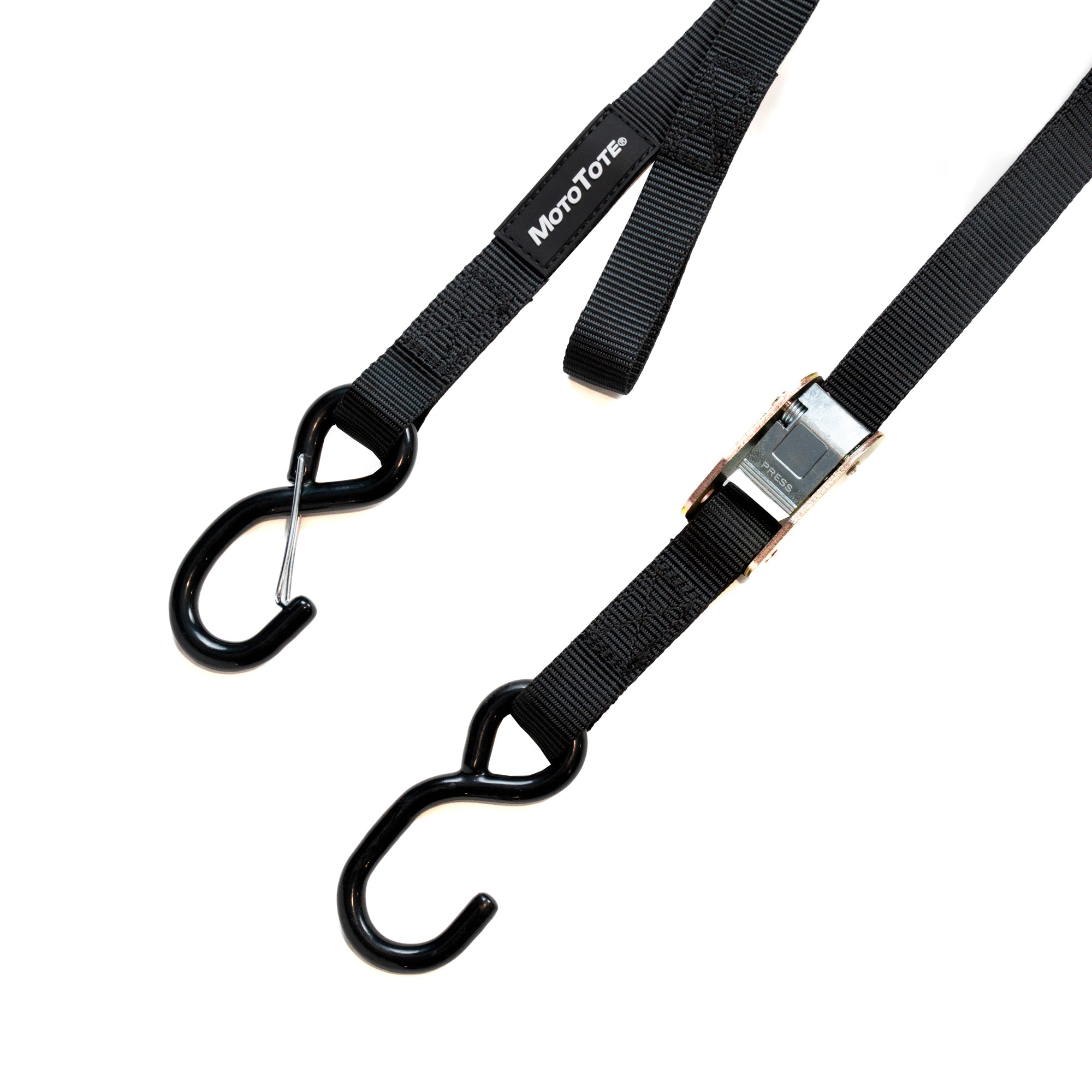
Motorcycle tie down bundle secures handlebars with soft loop, cam buckle tie downs, and rear tires with a cam buckle tie down.
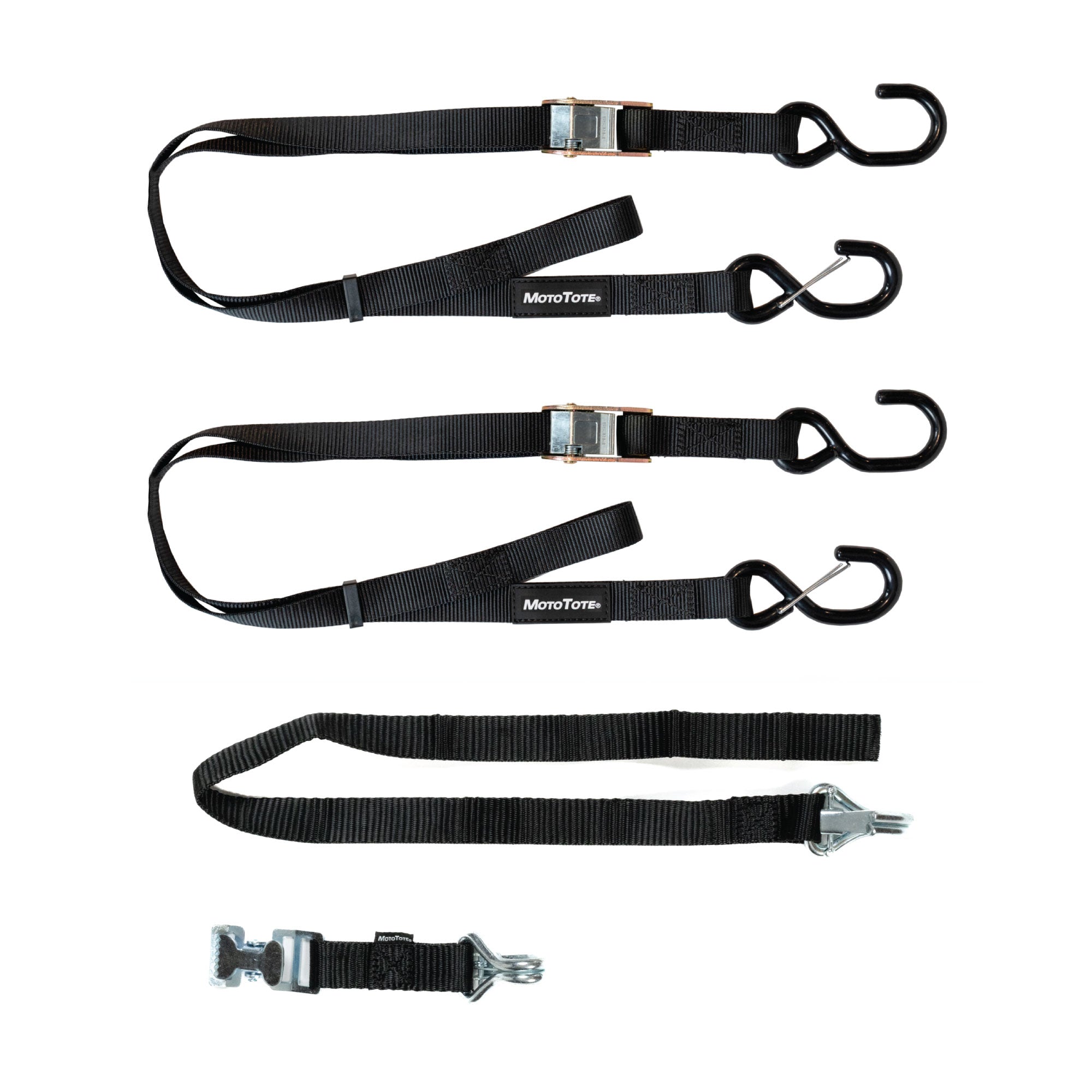
Electric Bike
Tie Down Bundle
Electric bike tie down bundle secures handlebars with soft loop, cam buckle tie downs, and rear tires with an innovative tire belt.
Dual E-Bike
Tie Down Bundle
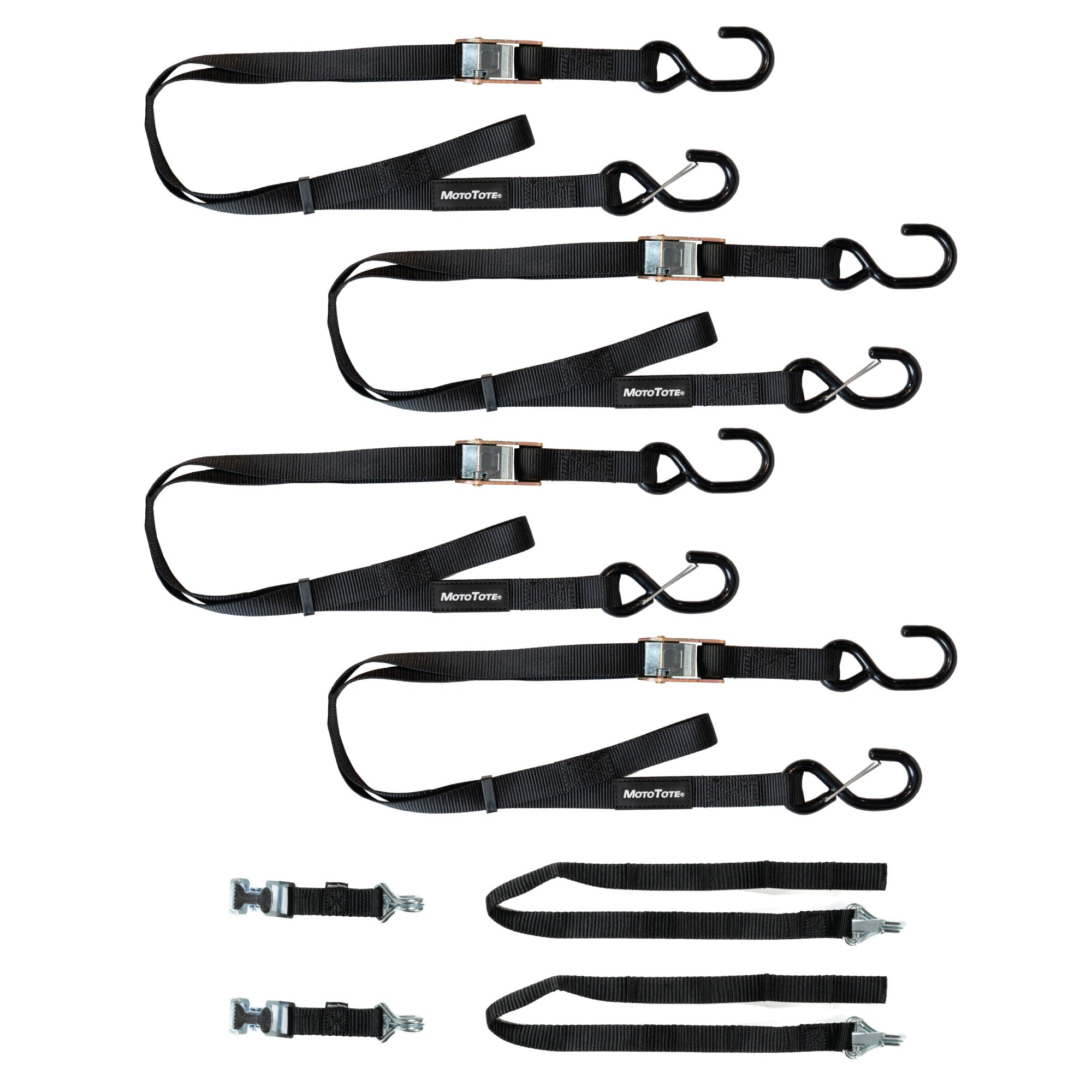
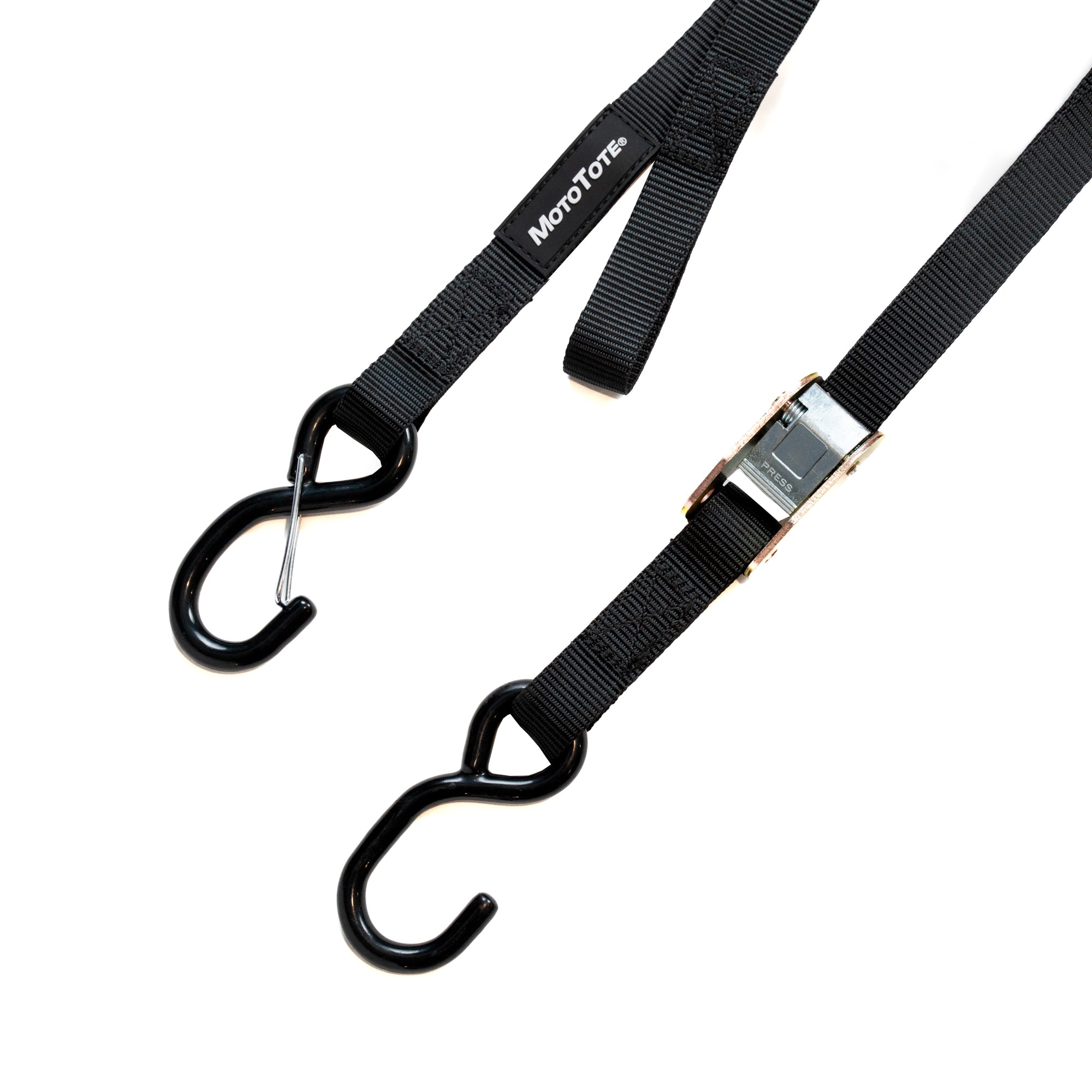
Two e-bike tie down bundle secures handlebars with a pair of soft loop, cam buckle tie downs, and rear tires with two basic wheel ties.
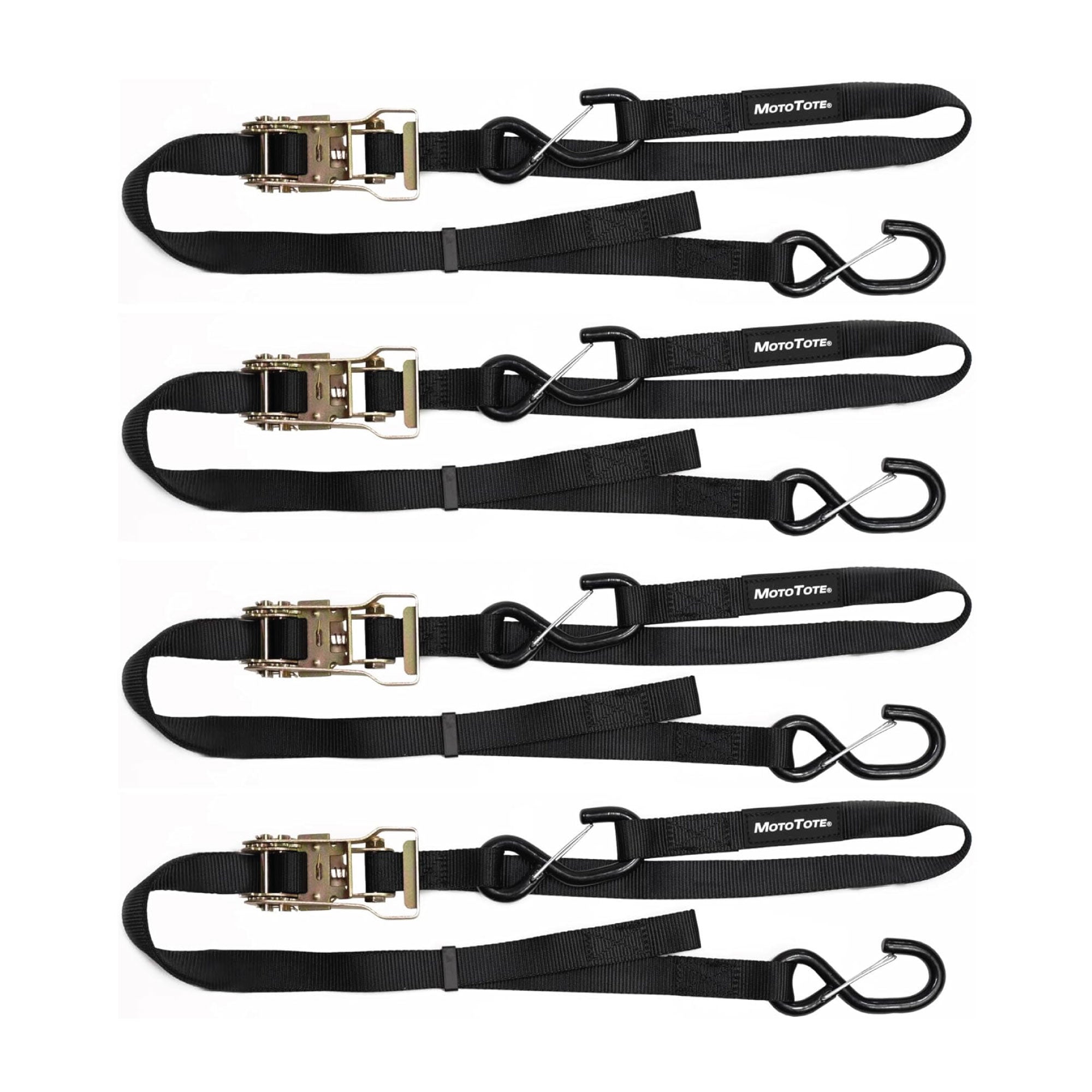
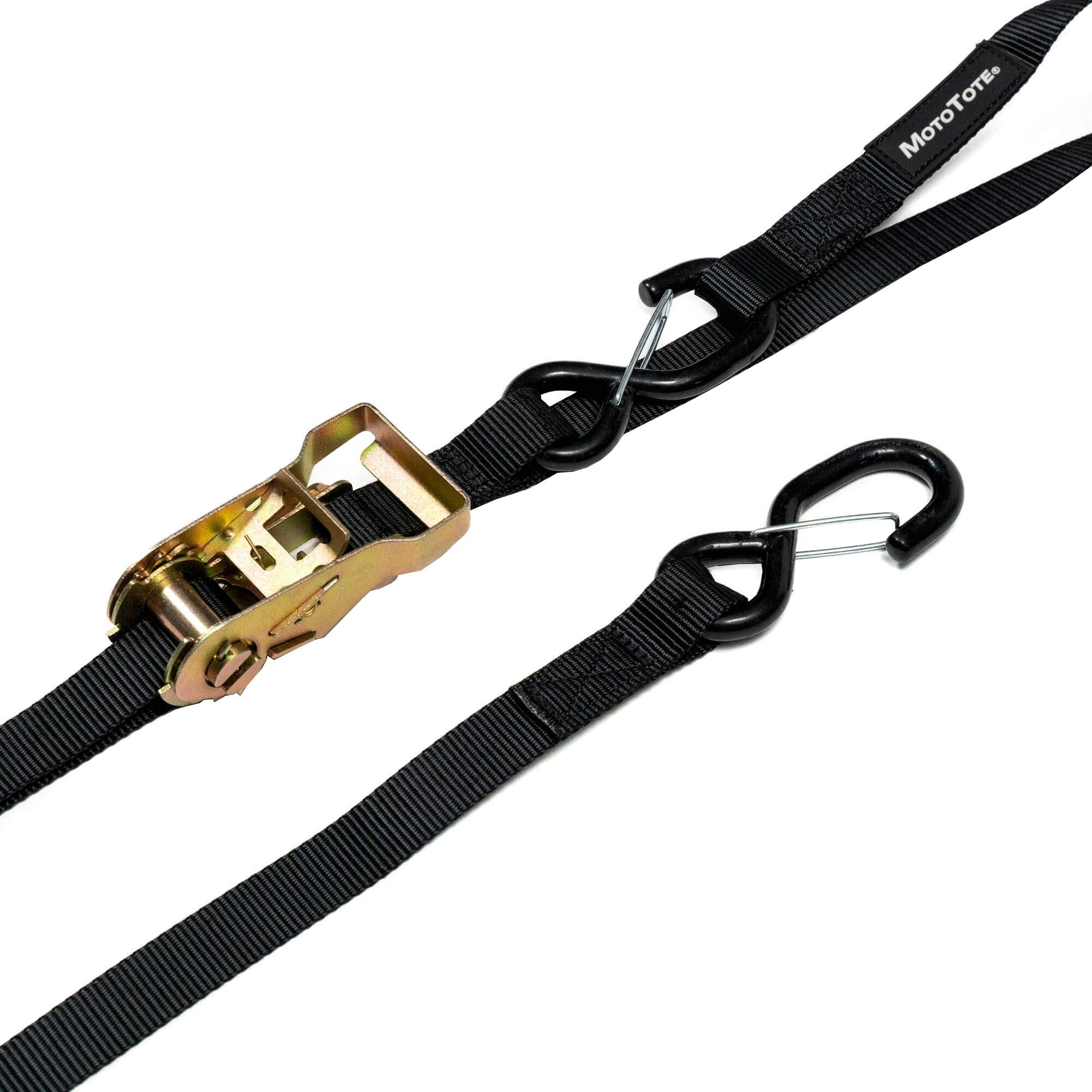
SafeLoop Ratcheting - 4 Pack
Tie Down Bundle
Trusted tie-down bundle secures motorcycles and more with four soft loop s-hook tie-downs with ratchets.
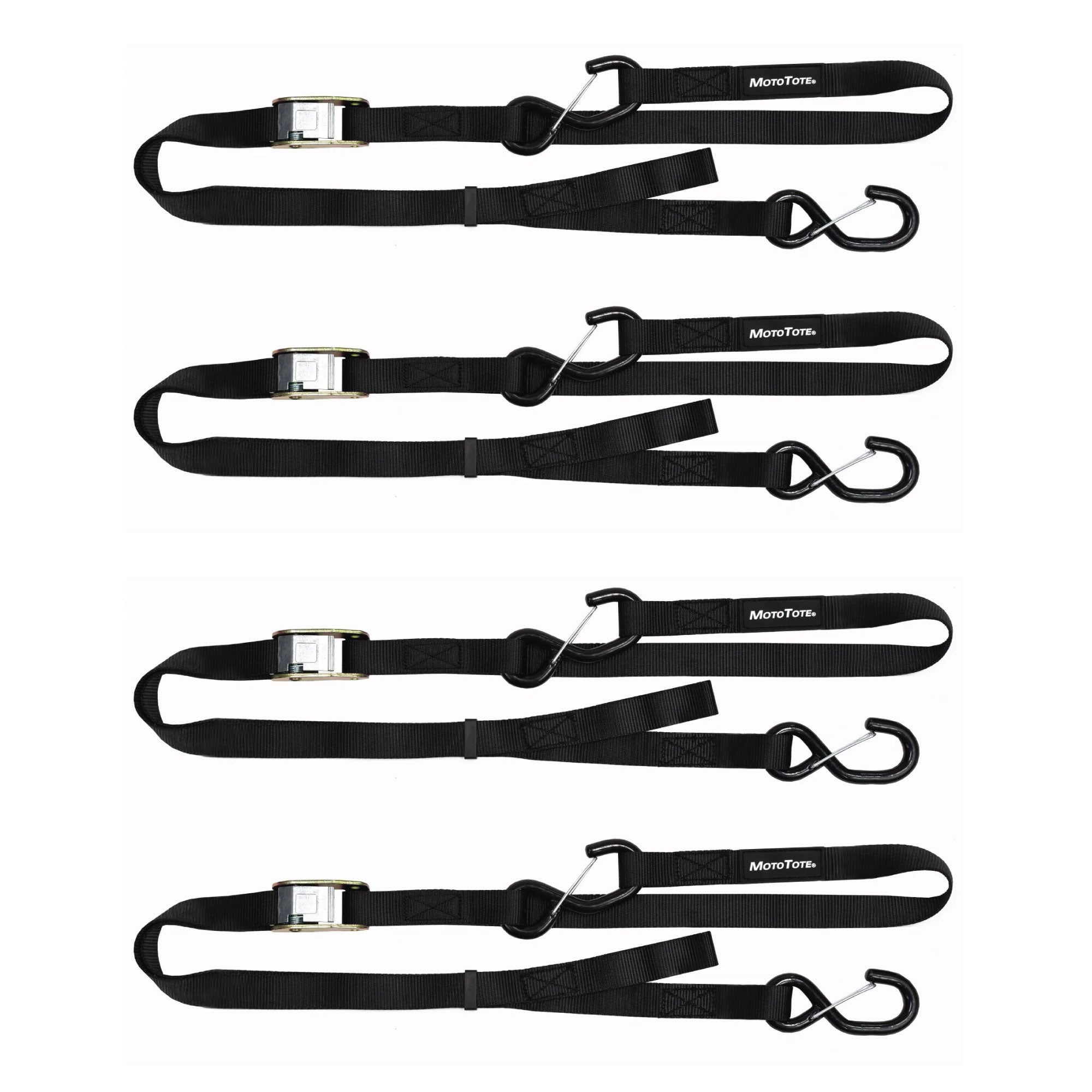
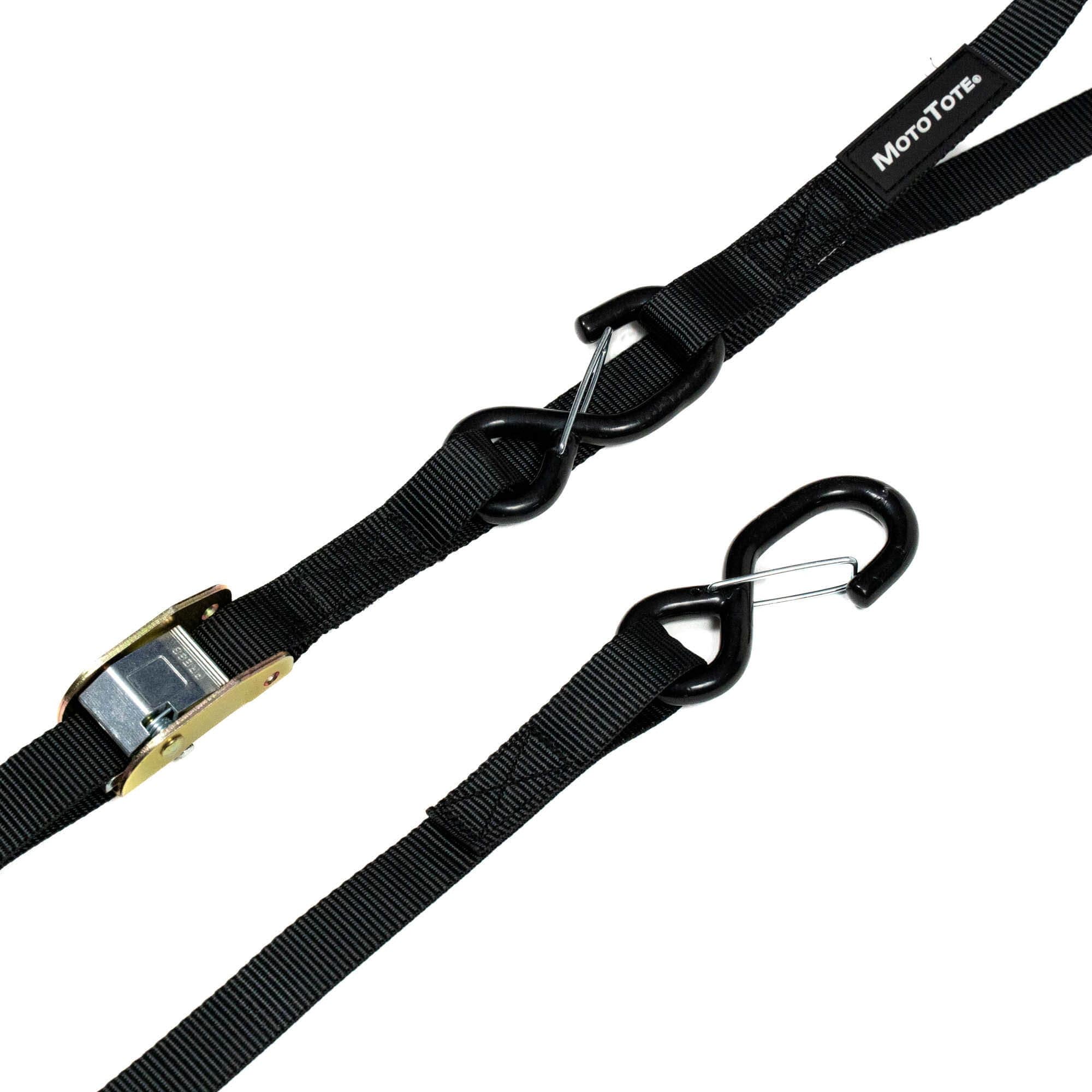
SafeLoop Cam Buckle - 4 Pack
Tie Down Bundle
Trusted tie-down bundle secures motorcycles and more with four soft loop s-hook tie-downs with spring-loaded levers.
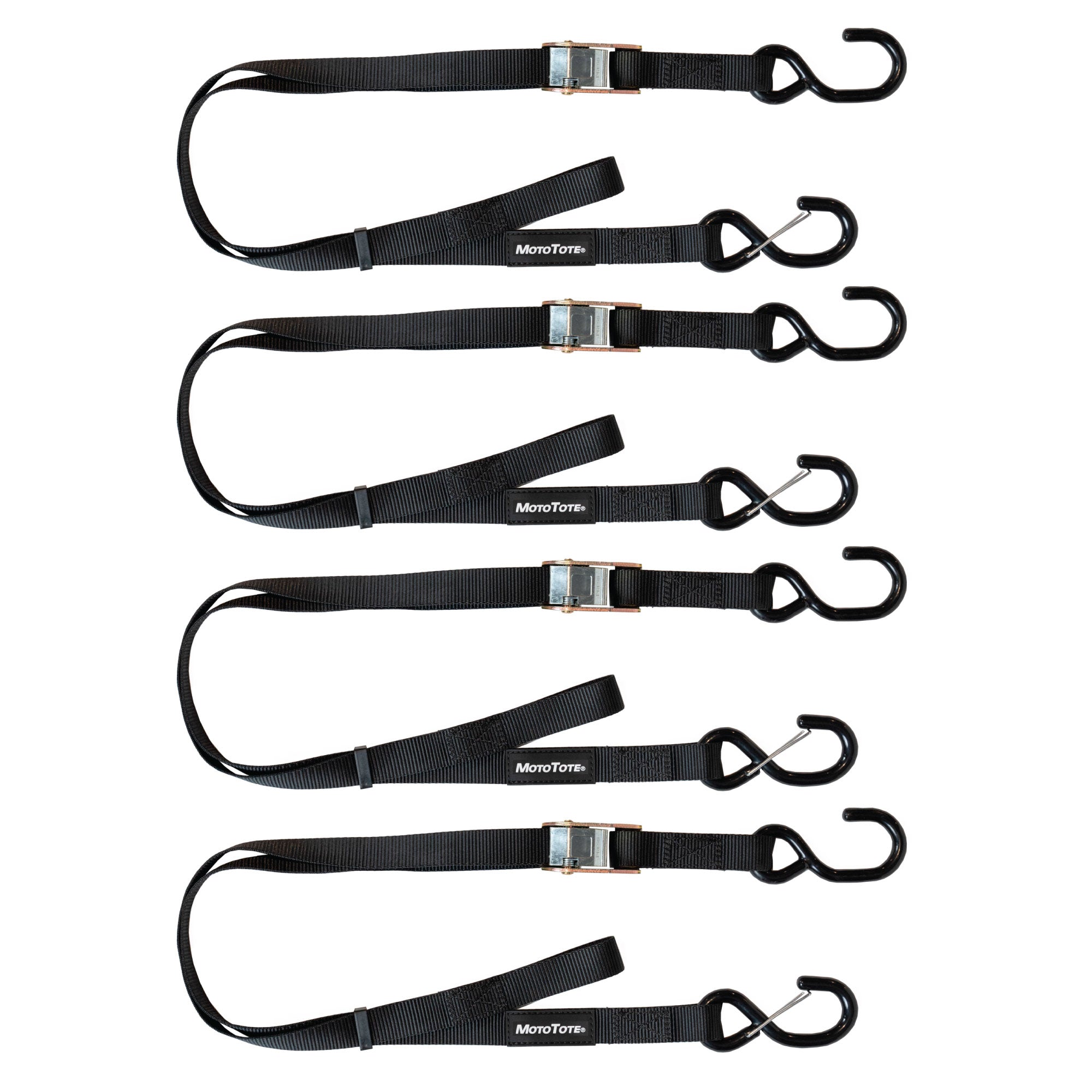

Cam Buckle - 4 Pack
Tie Down Bundle
Trusted tie-down bundle secures motorcycles and more with four classic s-hook tie-downs with spring-loaded levers.
FAQs
How tight should my front straps be?
Compress the front suspension slightly—just enough to stabilize the motorcycle. There's no need to completely bottom out the forks.
Are ratchet straps stronger than cam buckle straps?
Both are extremely secure when used correctly. Ratchet straps simply use mechanical leverage to achieve higher tension with less physical effort.
Can I hook directly to my motorcycle?
Yes, provided the motorcycle has appropriate tie-down points that won't damage painted or delicate components.
Do I need rear tie-downs?
Absolutely. While the front tie-downs stabilize the motorcycle, the rear tie-down prevents the rear tire from lifting, hopping, or shifting inside the carrier.
Why choose a TireSling over a standard rear wheel strap?
The TireSling wraps around the tire for greater contact and improved stability, especially during long trips or rough-road travel.
Does the TireSling work on every MotoTote carrier?
Yes. It is compatible with all MotoTote carriers, but you'll experience the greatest performance on the Max and Max+ thanks to their longer rear tie-down arms.
Should I check my tie-downs after I begin driving?
Yes. Stop after the first 10–20 miles to verify that everything remains tight and secure. On longer trips, inspect your tie-downs periodically along the way.