

How to Transport a Motorcycle: 5 Methods Compared
There are several safe ways to transport a motorcycle, but the right method depends on your vehicle, motorcycle weight, travel distance, budget and how frequently you plan to haul.
For a one-time move, the cheapest way to transport a motorcycle may be borrowing a pickup or renting a trailer. Riders who transport regularly may save more over time with a reusable hitch carrier. For a long-distance move when you cannot make the trip yourself, professional motorcycle shipping may be worth the additional cost.
This guide compares five common motorcycle transportation methods so you can choose the best solution for your bike and vehicle.
Motorcycle Transportation Comparison
| Method | Approximate cost | Required equipment | Best for | Main drawback |
|---|---|---|---|---|
| Motorcycle trailer | $ rental; $$$ ownership | Trailer, tow vehicle, ramp, wheel chock and tie-downs | Multiple bikes and frequent hauling | Storage, towing and added travel costs |
| Pickup bed | $ if you own the truck | Loading ramp, wheel chock and tie-downs | Occasional local transportation | High loading height and lost cargo space |
| Cargo van | $ if already owned; $$–$$$ to rent | Ramp, secure floor anchors, wheel chock and straps | Enclosed motorcycle transport | Requires sufficient interior space and ventilation |
| Professional shipping | $$–$$$ per shipment | Carrier booking and condition documentation | Long-distance and one-time moves | Higher recurring cost and less schedule control |
| Hitch carrier | $$ upfront; low repeat cost | Rated hitch receiver, carrier, ramp and tie-downs | Regular transportation of one or two motorcycles | Vehicle and tongue-capacity requirements |
Actual costs vary by distance, location, rental availability, equipment quality and motorcycle size.
1. Transporting a Motorcycle on a Trailer
A motorcycle trailer provides a stable platform and enough room for one or more motorcycles. You can rent a trailer for occasional trips or purchase one if you transport motorcycles frequently.
Equipment required
- Compatible tow vehicle and receiver
- Motorcycle or utility trailer
- Loading ramp
- Wheel chock
- Front tie-down straps
- Rear-wheel restraint
- Working trailer lights and safety chains

Advantages
- Can transport multiple motorcycles.
- Lower loading height than most pickup beds.
- Provides room for additional riding equipment.
- A purpose-built motorcycle trailer may include wheel chocks and tie-down points.
Disadvantages
- Requires towing experience and more room to turn, park and reverse.
- Purchased trailers require storage, maintenance and registration.
- Rental availability and costs can vary.
- Additional axles may increase tolls.
- Added weight and drag can reduce fuel economy.
A rental trailer can be one of the cheapest ways to transport a motorcycle for a single local trip. Purchasing and storing a trailer makes more sense for riders regularly hauling multiple bikes.
2. Transporting a Motorcycle in a Pickup Bed
A pickup bed is a practical option when you already own or can borrow a suitable truck. It avoids towing, but loading a motorcycle into a high truck bed can be challenging.
Equipment required
- Pickup with adequate payload capacity
- Motorcycle loading ramp rated for the bike’s weight
- Wheel chock or secure front-wheel position
- Strong factory or properly installed tie-down points
- Two front straps and a rear-wheel restraint

Advantages
- Low additional cost if you already own the truck.
- No trailer to store or maneuver.
- The motorcycle remains inside the vehicle’s footprint.
- Suitable for occasional local transportation.
Disadvantages
- Greater loading height increases difficulty and risk.
- A longer motorcycle may not fit with the tailgate closed.
- The bike occupies most of the truck’s cargo space.
- Truck-bed liners can reduce traction while loading.
- Loading heavier motorcycles may require help or a wider ramp system.
Before loading, confirm the truck’s payload capacity and measure the motorcycle’s wheelbase against the usable bed length. Never rely on the tailgate alone to support weight unless the manufacturer confirms it can handle the load.
3. Transporting a Motorcycle in a Van
A properly equipped cargo van can protect a motorcycle from weather, road debris and theft. It can work well for long-distance transportation, but interior height, length and tie-down locations must be verified.
Equipment required
- Cargo van with adequate payload and interior dimensions
- Rated loading ramp
- Secure floor-mounted tie-down points
- Wheel chock
- Front and rear restraints
- Proper ventilation and separation from occupied space

Advantages
- Protects the motorcycle from weather.
- Provides additional security when parked.
- Keeps the bike and equipment together.
- Avoids towing a separate trailer.
Disadvantages
- Requires enough interior height and length.
- Loading space cannot be used for passengers or other cargo.
- Secure floor anchors may need to be installed.
- Fuel or fluid odors make motorcycles poorly suited to occupied camper living areas.
- Rental charges and mileage can make long trips expensive.
A van is most practical when it is already configured for cargo. For camper vans and RVs, an exterior hitch carrier keeps the living area available for people, luggage and camping equipment.
4. Using a Professional Motorcycle Shipping Service
Professional shipping is useful when purchasing a motorcycle in another state, relocating or moving a bike without making the trip yourself.
Shipping may be open or enclosed, door-to-door or terminal-to-terminal. Pricing depends on distance, route, motorcycle size, timing and the level of protection requested.
What you need
- A reputable, insured motorcycle transporter
- Accurate motorcycle dimensions and weight
- Pickup and delivery access
- Photographs documenting the bike’s condition
- Written information about insurance and claims
- Keys and fuel preparation as required by the transporter

Advantages
- You do not need a tow vehicle or hauling equipment.
- Useful for cross-country and one-time moves.
- Professional services handle loading and transportation.
- Enclosed transport can provide additional weather protection.
Disadvantages
- Usually one of the more expensive options.
- Pickup and delivery windows may be broad.
- You give up direct control of the motorcycle during transit.
- Insurance limits and exclusions vary.
- Repeated shipments become expensive compared with owning equipment.
Request multiple written quotes and confirm whether insurance, residential delivery, oversized-bike charges and fuel surcharges are included.
5. Using a Motorcycle Hitch Carrier
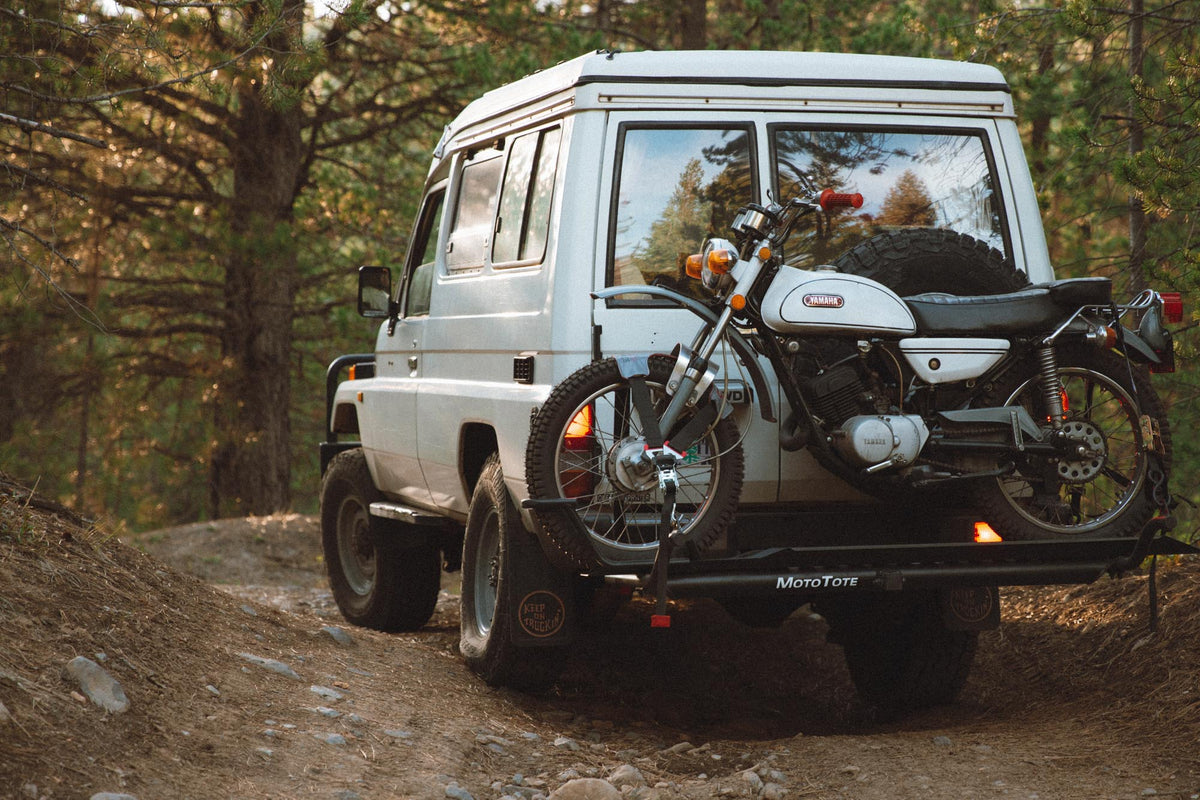
A motorcycle hitch carrier mounts directly to a compatible receiver and carries the motorcycle behind the vehicle. It offers the convenience of trailer-free transportation while preserving the truck bed, van interior or RV cargo area.
MotoTote motorcycle hitch carriers include single- and dual-bike options for motorcycles weighing up to 600 pounds, depending on the carrier and complete setup.
Equipment required
- Compatible 2-inch hitch receiver
- Sufficient vehicle tongue-weight capacity
- Motorcycle hitch carrier
- Loading ramp
- Two front tie-down straps
- Rear-wheel restraint
- Lighting or plate-relocation accessories when required

Advantages
- No trailer to tow, register, park or store.
- Lower loading height than most pickup beds.
- Preserves interior and truck-bed cargo space.
- No additional trailer axle at toll roads.
- Faster to connect and store than a trailer.
- Low additional cost for repeated trips after purchase.
Disadvantages
- The vehicle must have sufficient tongue-weight capacity.
- Motorcycle and carrier weight are supported behind the vehicle.
- Rear visibility, lights or the license plate may require attention.
- Not every motorcycle fits every carrier track or tire configuration.
- Dual carriers create additional leverage and require more vehicle capacity.
Before purchasing, use the MotoTote Fit Calculator to check your motorcycle and vehicle combination.
What Is the Cheapest Way to Transport a Motorcycle?
The answer depends on what equipment you already own and whether this is a one-time or recurring need.
- For one local trip: Borrowing a properly equipped pickup or renting a motorcycle trailer will often have the lowest immediate cost.
- For repeated transportation: A hitch carrier can provide a lower long-term cost because there are no recurring rental or professional shipping charges.
- For multiple motorcycles: A trailer may provide the most practical cost per bike.
- For a long-distance move you cannot make yourself: Professional shipping costs more, but it may be less expensive than renting a vehicle, paying for fuel and spending several days traveling.
- If you own a cargo van: Interior transport can be economical when the van has adequate space and rated tie-down points.
The lowest advertised price is not always the lowest total cost. Account for fuel, mileage, tolls, registration, storage, loading equipment and your time.
Vehicle Requirements
Before choosing any transportation method, confirm:
- Motorcycle weight: Use the ready-to-ride or wet weight, not only the advertised dry weight.
- Carrier or trailer weight: Include the transportation equipment in the total load.
- Tongue-weight capacity: For a hitch carrier, add the motorcycle, carrier and accessories. The complete weight must remain within the vehicle and hitch limits.
- Towing capacity: Confirm towing capacity before using a trailer.
- Payload capacity: Include passengers, cargo and motorcycle weight when using a truck or van.
- Receiver compatibility: Confirm hitch size, rating and accessory requirements.
- Motorcycle dimensions: Check wheelbase, front and rear tire width, ground clearance and handlebar clearance.
Vehicle ratings should come from the owner’s manual, hitch label or manufacturer—not an estimate based solely on vehicle size.
Motorcycle Transportation Safety Checklist
Before driving:
- Confirm the vehicle, hitch, carrier or trailer is properly rated.
- Inspect the ramp, track, wheel chock and tie-down points.
- Position the motorcycle upright and centered.
- Use two front restraints with balanced tension.
- Secure the rear wheel to prevent sideways movement and bouncing.
- Avoid attaching straps to fragile controls, brake lines or bodywork.
- Secure all loose strap ends.
- Confirm the license plate and required lights remain visible.
- Check tire pressure on the vehicle and trailer, if applicable.
- Test brake lights, turn signals and trailer lights.
- Stop after the first few miles and inspect every connection.
- Recheck the setup during fuel and rest stops.
Choosing the Best Way to Transport Your Motorcycle
There is no single method that works for every rider.
Trailers provide capacity, pickup beds can be inexpensive when a truck is already available, vans offer enclosed protection, and professional shipping removes the need to transport the bike yourself. For riders who haul regularly and have a compatible vehicle, a motorcycle hitch carrier offers a reusable solution without the storage and maneuvering demands of a trailer.
Compare MotoTote’s motorcycle carrier options, or check your motorcycle and vehicle with the Fit Calculator before choosing a setup.

Share:
Can You Put a Motorcycle on a Hitch Carrier?
How Do You Transport an Electric Bike on a Car?